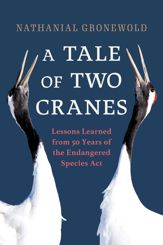
“Nathanial Gronewold presents out-of-the-box theories of economic relativity that would intrigue Albert Einstein. Anyone who loves to think will enjoy Anthill Economics and its creative and thought-provoking analysis of how real-life financial issues are impacted by physics and the laws of nature. If you’ve been disappointed by economists – and most of us have – you will appreciate the alternative clues presented in this entertaining book about our economic futures.”
–Thomas P. Vartanian, Executive Director, Financial Regulation & Technology Program and Professor of Law at George Mason University’s Antonin Scalia Law School, and the author of 200 Years of American Financial Panics: Crashes, Recessions, Depressions, and the Technology that Will Change it All
Description
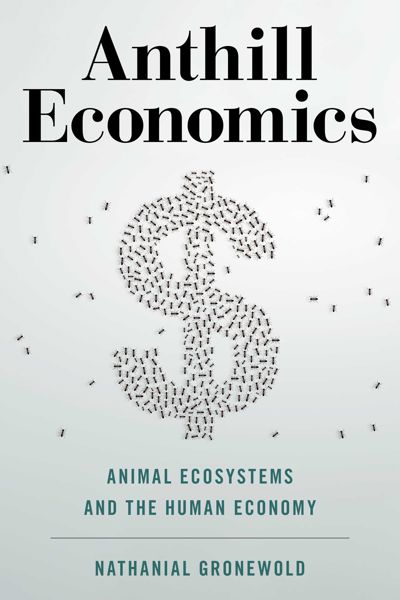
Does modern economic theory violate the basic laws of nature and physics? That is the question that award-winning environmental and energy writer Nathanial Gronewold sets out to answer in Anthill Economics.
Drawing from the nascent field of biophysical economics, Anthill Economics puts forth a radical new way of thinking: as 21st-century citizens, the global economy truly is our human ecosystem. It is where raw materials are sourced, goods are supplied, energy is converted, and capital is exchanged. Shouldn't it stand to reason that the same principles that affect animal ecosystems (like population density, habitation patterns, and energy return on investment) similarly apply to our –albeit more complex –human ecosystem, too?
With an innovative and cross-disciplinary approach, Gronewold draws comparisons from both the animal kingdom and the atomic world. The rollercoaster-like rise and fall of the caribou population on a remote island can teach us about resource allocation. The behavior of squirrels gathering nuts is a lesson in energy return on investment. Could the high unemployment rates of anthill colonies shed light on problems with the human job market? And, will global warming change these patterns for humans and insects alike? Furthermore, if certain laws of physics can be used to explain the distribution of energy in a complex physical system, could these same laws also explain the distribution of money in a complex economic system as well?
This clearly written book full of illuminating ecological analogies provides a more complete understanding of human commerce shaped by the rules of nature and laws of physics.
Reviews
“In Anthill Economics, Gronewold provides a great service by explaining crucial linkages between science and economics that have been neglected for far too long in economic and policy circles. As he eloquently explains, important social and economic concepts such as growth and income inequality are indeed linked to how we interact with the physical world, including the extraction of energy and natural resources. We must embrace these findings from researchers crossing academic and philosophical divides so we can make more accurately-informed policy decisions.”
–Dr. Carey W. King, Assistant Director and Research Scientist at the Energy Institute at the University of Texas at Austin