"A book with riveting historical perspective for careful thought about where we are and where we can go if we get it right."
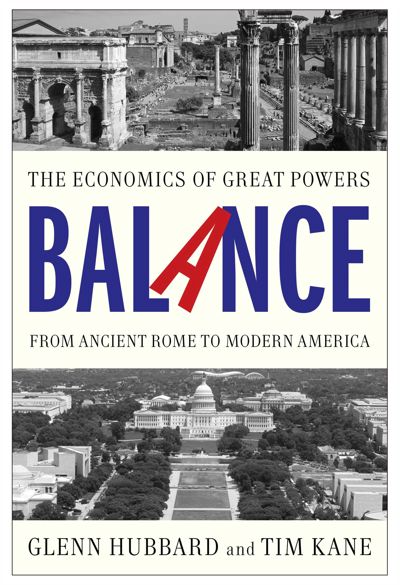
Balance
The Economics of Great Powers from Ancient Rome to Modern America
In this groundbreaking book, two economists explain why economic imbalances cause civil collapse—and why America could be next.
From the Ming Dynasty to Ottoman Turkey to Imperial Spain, the Great Powers of the world emerged as the greatest economic, political, and military forces of their time—only to collapse into rubble and memory. What is at the root of their demise—and how can America stop this pattern from happening again?
A quarter century after Paul Kennedy's Rise and Fall of the Great Powers, Glenn Hubbard and Tim Kane present a bold, sweeping account of why powerful nations and civilizations break down under the heavy burden of economic imbalance. Introducing a profound new measure of economic power, Balance traces the triumphs and mistakes of imperial Britain, the paradox of superstate California, the long collapse of Rome, and the limits of the Japanese model of growth. Most importantly, Hubbard and Kane compare the twenty-first century United States to the empires of old and challenge Americans to address the real problems of our country’s dysfunctional fiscal imbalance. Without a new economics and politics of balance, they show the inevitable demise ahead.
"A book with riveting historical perspective for careful thought about where we are and where we can go if we get it right."
"Hubbard and Kane synthesize economics, politics and psychology to develop a new audacious theory of why countries decline. Compulsory reading for anyone who wants to understand the major issues that America now faces and whether decline can be averted, or will instead become inevitable."
“In seeking to discover what might be common factors throughout history to explain the rise and decline of powerful states, Hubbard and Kane have succeeded in identifying surprisingly similar trajectories. Their thought-provoking analysis has compelling relevance for America’s future.”
"Political paralysis leading to fiscal collapse is the “existential threat” facing America, argues this stimulating, contentious economic history... Theirs is political economy with a grand historical sweep—and provocative implications for the present."