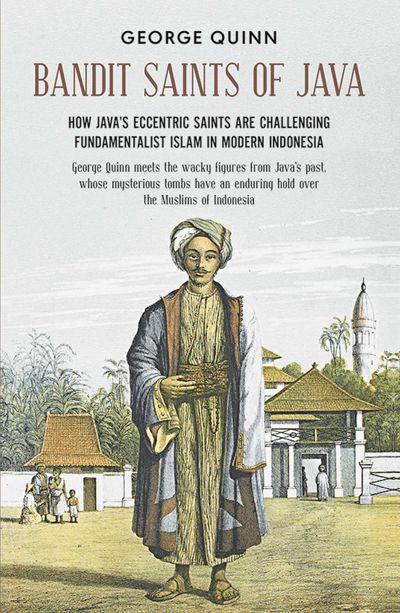
Java’s pilgrimage culture is a dense, batik-like pattern of contradictions: seriousness collides with laughter; curiosity with bewilderment; piety with scepticism; intense spirituality with, in some places, the joy of shopping. The pilgrimage culture on the island of Java in Indonesia – the world’s largest Muslim country – is a rebuke to the conservative orthodoxy that has been gaining ground in Indonesia’s religious landscape since the 1980s. In the rhetoric of this orthodoxy the “real” Islam is pure and exclusive. Piety comes from obedience to religious authority and its rules. Local pilgrimage is anything but pure and exclusive or rigidly authoritarian. It is powerfully Islamic but it fuses Islam with local history, the ancient power of place and a pastiche of devotional practices with roots deep in the pre-Islamic past. Quietly but tenaciously – just outside the great echo chamber of public space – it is growing as fast as the higher profile neo-orthodoxy. Bandit Saints of Java delves deep under the surface of modern Indonesia, exploring personalities and stories in the weird world of local pilgrimage, where Middle Eastern Islam wrestles with the ancient power of Javanese civilisation. It paints an astonishing portrait of Islam as it is practised today – largely invisible to journalists, scholars and tourists – by many of Java’s 130 million people.