Peot's enthusiasm is contagious and her ideas about using images to develop creativity are intriguing... this book is likely to make teachers and artists catch the inkblot bug.
Description
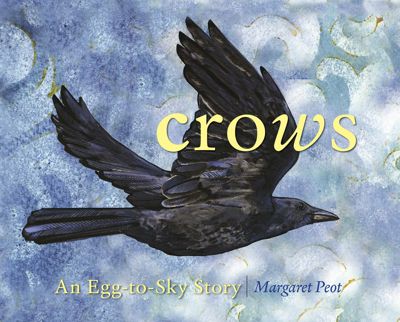
This book describes how crows meet, mate, nest, raise their young, and learn to fly, and their unique way of communicating. Crows are known to roost in large numbers in the fall and winter for safety, protection from the weather, and to find a mate. Young crows start fledging when they are 30-40 days old, sometimes tumbling to the ground when their flying skills have not yet developed. Mature crows will mob predators to protect grounded youngsters, while encouraging the fledglings to fly to safety. Crows are extremely intelligent, social birds. Their language is unique and not entirely understood by scientists. This introduction to the natural history of crows for children also includes a brief discussion of the difference between crows and ravens.
Reviews
A brightly illustrated story perfect for the very beginner reader.
In the well-composed ink-and-watercolor artwork, the unexpectedly brilliant hue of Crow's feathers glow against the many white backgrounds. A short, satisfying read-aloud choice with an inviting jacket and pictures that show up beautifully from a distance.
Heavy outlining and decorative borders give this detailed lifecycle story by Peot the feel of an illustrated manuscript. Each spread marks a stage of crow upbringing. Male crows court females, mates build nests together (lined with “soft grasses, moss, or fine bark strips”), and eggs are laid, warmed, and hatched (“Both parents clean and fluff the nest around the babies and make sure they are clean”). Unexpected crow trivia abounds: older siblings often return to help the parents care for chicks, and when fledglings land on the ground, crows work together to mob would-be predators. At last, fledglings fly and then roost, and the cycle begins anew. Two additional sections and a bibliography conclude this close-up view of intimate moments in a crow family’s life. Ages 6–9.