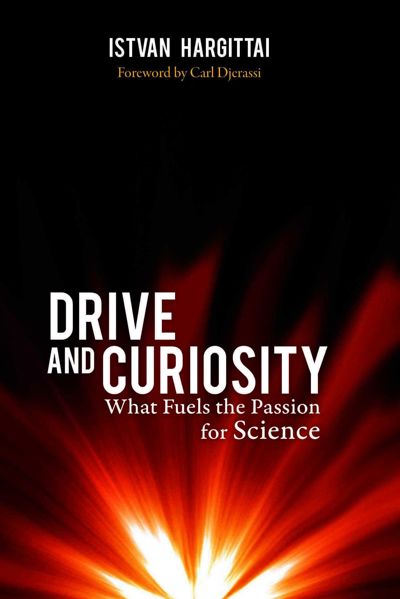
""Is there a recipe for research successes reaching the highest pinnacles? What are the common characteristics of discoveries that profoundly alter the world we live in? Drive and Curiosity presents fifteen case studies that explore these questions in a manner both inviting and at once accessible to readers having all different backgrounds.” —Richard N. Zare, Stanford University; Wolf Prize laureate; King Faisal International Prize laureate “Scientific discoveries that change the existing paradigm of their fields are few and far between. By examining the individuals and circumstances at the center of fifteen such breakthroughs, Istvan Hargittai has revealed in an elegant and personalized way the differing motivations and compulsions that drove the discoveries. His study reveals how curiosity, passion, persistence, resiliency, competitiveness, and the pride of accomplishment undoubtedly contributed to these monumental discoveries. Throughout each, the underlying driving force is what Horace Judson once referred to as ‘the rage to know’ and the ‘acute discomfort of unknowing.’ So long as science remains a difficult, exciting, and beautiful pursuit, confronting the limits of what is knowable will flourish.” —Paul Berg, Nobel laureate, Stanford University “What a variety of ways people have found to be creative! Hargittai’s most readable account of some of our scientific heroes and heroines focuses on their motivations, what drove them. Sorry, no secret to success, no philosopher’s stone—just some smart, hardworking people trying to do their darndest to understand the world. I find this very encouraging.” —Roald Hoffmann, Nobel laureate, chemist, writer “I read this fascinating book in an evening, intrigued by the varied backgrounds and motivations of the fifteen scientists portrayed. ‘Drive,’ yes, but for what? Sometimes for fame, but as often, it seems, to do good work, to merit the name, ‘scientist.’" —Richard L. Garwin, IBM fellow emeritus; recipient of the National Medal of Science “Perhaps nothing honors the spirit of the human race more than scientific discovery. Unlike other cultural achievements, science is universal; it is the result of the highest imagination and the deepest thinking. Hargittai’s book tells the fascinating details of the work of fifteen leading modern scientists who have changed the world. The book is, incidentally, an ideal gift to adolescents who show an interest in science.” —Peter Lax, professor emeritus of mathematics, Courant Institute, New York University; recipient of the National Medal of Science and the Abel Prize “Istvan Hargittai has done it again. His analyses of Nobel-class scientists provide a unique perspective on the sources of creativity in science.” —Eugene Garfield, chairman emeritus, ThomsonReuters Scientific (formerly ISI); editor emeritus, The Scientist
Description
What motivates those few scientists who rise above their peers to achieve breakthrough discoveries? This book examines the careers of fifteen eminent scientists who achieved some of the most notable discoveries of the past century, providing an insider's perspective on the history of twentieth century science based on these engaging personality profiles. They include: · Dan Shechtman, the 2011 Nobel laureate and discoverer of quasicrystals; · James D. Watson, the Nobel laureate and codiscoverer of the double helix structure of DNA; · Linus Pauling, the Nobel laureate remembered most for his work on the structure of proteins; · Edward Teller, a giant of the 20th century who accomplished breakthroughs in understanding of nuclear fusion; · George Gamow, a pioneering scientist who devised the initially ridiculed and now accepted Big Bang. In each case, the author has uncovered a singular personality characteristic, motivational factor, or circumstance that, in addition to their extraordinary drive and curiosity, led these scientists to make outstanding contributions. For example, Gertrude B. Elion, who discovered drugs that saved millions of lives, was motivated to find new medications after the deaths of her grandfather and later her fiance. F. Sherwood Rowland, who stumbled upon the environmental harm caused by chlorofluorocarbons, eventually felt a moral imperative to become an environmental activist. Rosalyn Yalow, the codiscoverer of the radioimmunoassay always felt she had to prove herself in the face of prejudice against her as a woman. These and many more fascinating revelations make this a must-read for everyone who wants to know what traits and circumstances contribute to a person's becoming the scientist who makes the big breakthrough.