“In Faulty Towers: Tenure and the Structure of Higher Education, I am pleased to see The Independent Institute has produced another useful resource for academics, administrators and all those concerned with educational reform.”
Description
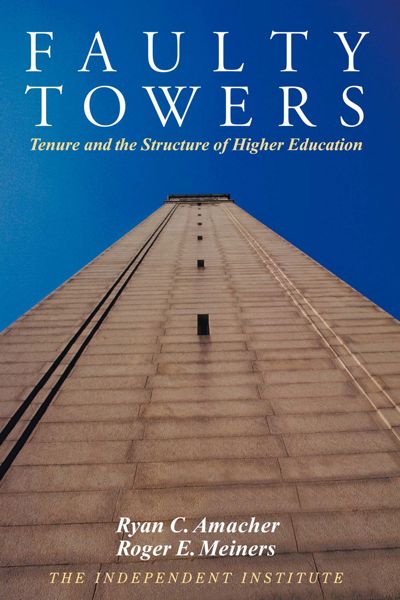
In Faulty Towers: Tenure and the Structure of Higher Education, Ryan C. Amacher and Roger E. Meiners examine the internal and external reforms necessary to bring competitive forces to American universities and thereby improve them.
As debate accelerates over the declining standards in higher education, academic tenure is viewed with suspicion by many, who see it merely as job protection for incompetent teachers. Even many professors believe tenure is a guarantee of lifelong entitlement, whereby only the commission of a crime can lead to dismissal. Faulty Towers sets the record straight by elucidating the history, legal status, and common misunderstandings regarding tenure.
Tenured professors who have become incompetent are rarely dismissed, and superior teaching is rarely rewarded, although there is little to prevent universities from doing so. Tough administrators are also hard to find—in part because university trustees seldom hold them accountable. Faulty Towers explains how restructuring university incentives to be more in line with those of market-based enterprises would produce greater accountability, stronger boards of trustees, more effective administrators, and a tenure system that protects academic freedom but not substandard education.
Reviews
“Faulty Towers is a welcome contribution to the debate over tenure. It is especially effective in explicating the tensions inherent in protecting academic freedom while addressing instances of professorial incompetence and malfeasance.”
“Faulty Towers has two major strands of thought. First, there are obviously many incompetent professors who need to be removed from the academy, a point made on almost every other page. Second, the organization of universities and the sole authority to run them needs to be turned over to a market-driven,executive administrative branch that is free from the tyranny of faculty involvement with any but the most cursory input... On reflection, this book has many ideas and suggestions worth considering within the structure of one's own institution. I am sure that several have potential and some institutions would benefit from discussing some of the ideas presented.”
“A very sensible, balanced and informed book on the complex problems of governing colleges and universities, and not the least of its virtues is its convincing demonstration that academic tenure is not the major obstacle to improving colleges and universities, as so many believe.”