"A Chinese version of One Hundred Years of Solitude." -- Li Yonghong, Contemporary Literature Scene
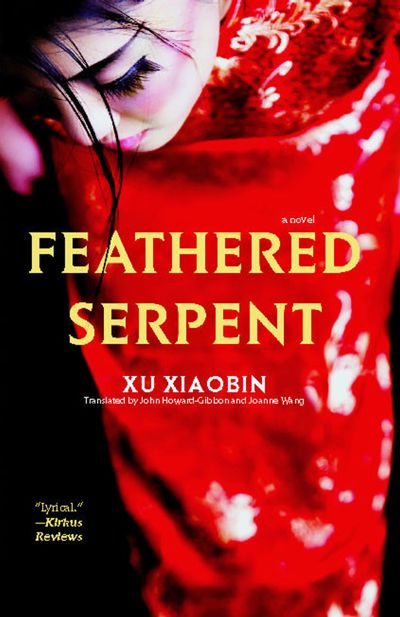
Feathered Serpent
A Novel
ONE OF THE FOREMOST WORKS OF TWENTIETH-CENTURY CHINESE LITERATURE
This beautifully portrayed epic family history spans one hundred years, from the 1890s during the later stages of the Qing Dynasty to the 1990s, traversing the experiences of five generations of women. Yu is the central character, whose life story is woven through the lives of her grandmother, mother, sisters, and niece. She loves her parents but at a tender age realizes they do not love her. After committing two unforgivable sins, she is sent away to live in the city but is soon abandoned. Yu's life becomes a quest for love; she is fragile but resilient, lonely but determined. Now, in the 1980s, Yu becomes caught up in the political storm and comes close to love but falls short. Her last chance at getting what she desires will ultimately come at a tragic cost.
A political satirist in the guise of a mystical writer, Xu Xiaobin masterfully creates an atmosphere where distinctions are blurred; memories of the past and present are intertwined; realities and illusions are fused without a clear trace; and events occur in unspecified places but tinted with fairylike imaginations.
Xu Xiaobin is a rare talent with a vast knowledge of history, religion, and culture, and occupies a unique place in modern Chinese literature. When Feathered Serpent won China's inaugural Creative Writing Award for women's literary fiction, it was described as "a breakthrough, a record-setting novel in China's women's literature" and "the best fiction at the end of the century in China."
"A Chinese version of One Hundred Years of Solitude." -- Li Yonghong, Contemporary Literature Scene
"Feathered Serpent may be viewed as a twenty first-century Chinese version of Dostoyevsky's Crime and Punishment." -- Chen Fumin, Literature Research Institute of the Chinese Academy of Social Sciences
"Xu Xiaobin's mysterious and meditati ve writing goes much further. Her aparent desire is to emphasize that which is unknown and unknowable in the human heart, in the character's destiny, and in the civilization he or she inhabits." -- Jin Siyan, acclaimed author in present-day China
"A unique bok worth a patient reading and understanding; its richness, its depth, and its beauty all demonstrat e that Chinese contemporary women's literary writing has arrived at a high level." -- Chen Xiaoming, a top critic and professor of Chinese literature at Peking University