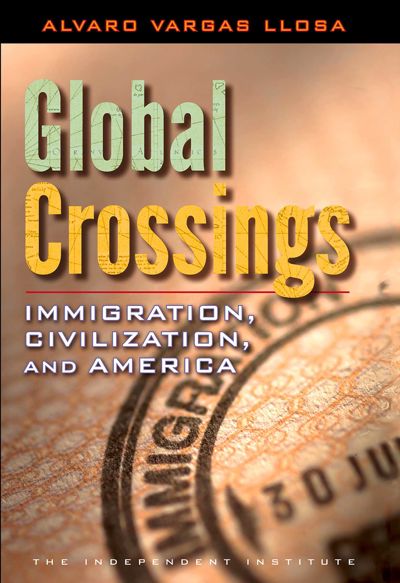
“This compelling book is a must read for anyone on the vital yet contentious issue of immigration. Global Crossings puts a personal face on the issue, superbly arguing that restrictions on the basis of accident of birthplace have no economic or social justification, and in the hands of government are a dangerous infringement on individual liberty and human well-being.”
Description
Immigration still elicits fear and mistrust, and not just on the part of the “receiving” society despite having occurred for thousands of years throughout human history. Communities from which people migrate often disapprove of the migrants’ decision and consider it treacherous. The recent reawakening of the debate about immigration in the new millennium has evoked intense emotion particularly in the United States and Europe.
Global Crossings cuts through the jungle of myth, falsehood and misrepresentation that dominates the debate, clarifying the causes and consequences of human migration. Why do millions of people continue to risk their lives, and oftentimes lose them, in the pursuit of a chance to establish themselves in a foreign land?
The book first looks at the immigrant experience, which connects the present to the past, and America to the rest of the world, and explores who migrants are and why they move. The conduct of migrants today is no different than that of migrants in the past. And contrary to the claims by immigration critics, the patterns of contemporary migration do not differ fundamentally from those of other epochs.
Global Crossings then discusses immigration regarding culture. To what degree are foreigners culturally different? Can natives adapt? Can immigrants assimilate into the new society? In assessing whether critics are justified in pointing to a major cultural shift Alvaro Vargas Llosa reviews such topics as religion, education, entrepreneurial spirit, and attitudes toward the receiving society.
The book then analyzes such economic factors as jobs, wages, education, and the welfare state. How can an economy continue to operate even in the face of major legal obstacles, and how have recessions and times of prosperity influenced—more significantly than government efforts—the number of immigrants coming into the United States and other countries? Vargas Llosa finds that immigration’s contributions to an economy far outweigh the costs.
Finally Global Crossings makes a call for open minds and provides a pro-immigration agenda for reform. The erosion of national boundaries—and even the idea of the nation state—is already underway as people become ever more inter-connected across borders. This process will make immigration a defining force in the arena of competitive globalization and the people of those countries who embrace immigration will enjoy more prosperous, peaceful, and freer lives in the emerging world.
Reviews
“Global Crossings: Immigration, Civilization, and America is a much needed antidote to the hysterical drivel that dominates the debate over immigration reform. The book demonstrates how important it is to adapt our immigration policy to the needs of our economy and to welcome those who will make a genuine contribution to our future prosperity. America's success as an immigrant nation is in danger from those who would close our borders out of fear and ignorance. Global Crossings dispels both.”
“Global Crossings dispels the myths over the crucial yet divisive issue of immigration. As a nation of immigrants, America has been enriched economically and culturally from these new arrivals, and Vargas Llosa shows why our future will depend on continuing to advance a welcoming immigration policy.”
“Why do people migrate? What motivates people to go from one country to another? Álvaro Vargas Llosa responds to these vital questions in his new book Global Crossings: Immigration, Civilization, and America. He leads us on a valuable tour of immigration throughout the world and then focuses on aspects of the history of immigration in the U.S. The book highlights the role of immigrants in the development of nations, throwing overboard the myth that immigrants cost more than they provide or take away the jobs of citizens. Vargas Llosa encourages an ‘open mind’ which supports national policies that assimilate the cultural richness of immigrant groups and also fights against the criminalization of migration.”