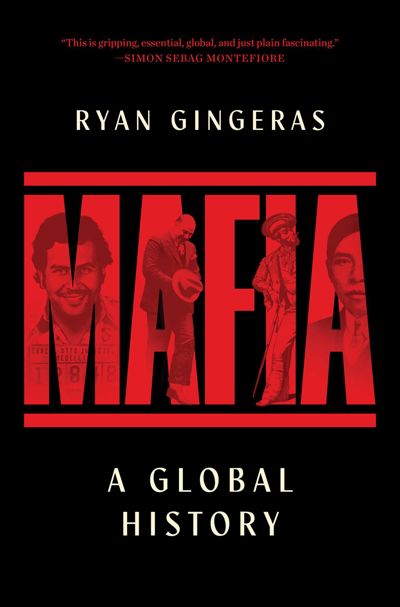
“A wide-ranging history . . . A revealing study of organized crime and its many forms.” —Kirkus Reviews
Mafia
A Global History
A gripping and deeply researched exploration of the hidden influence of organized crime on the global economy that reveals the mafia as an uncredited architect of modern society.
In Mafia: A Global History, Ryan Gingeras takes readers on a fascinating journey into the shadowy world of organized crime and its far-reaching impact on contemporary society. From backroom deals to global power plays, this compelling narrative spans two centuries, unraveling the complex ties between crime syndicates and law enforcement—and how these relationships have reshaped both sides in unexpected ways.
Drawing on over a decade of in-depth research into the global drug trade, Gingeras profiles legendary figures like Al Capone, Pablo Escobar, El Chapo, and Dawood Ibrahim, bringing their stories to life while exposing how these mafias have tested the boundaries of state power. By challenging the law, these criminal networks force governments to adapt, leaving an indelible mark on governance, society, and the global economy.
Gingeras identifies three key spheres of transformation: the legal limits tested by mafias, their economic activities reflecting the Western bloc’s dominance in global trade, and their undeniable presence in pop culture. As crime syndicates continue to evolve in the 21st century, Gingeras highlights the alarming blurring of lines between gangsters, corporations, and political leaders—a trend that threatens to destabilize the global order.
For true crime fans and history buffs alike, Mafia is a must-read. With echoes of Mark Bowden’s Killing Pablo and Sam Quinones’s Dreamland, Gingeras delivers a masterful blend of storytelling and meticulous analysis that will leave you questioning just how much of the world around us is shaped by those operating in the shadows.
“A wide-ranging history . . . A revealing study of organized crime and its many forms.” —Kirkus Reviews
“Historian Gingeras offers a historical deep dive into the murky world of gangland, from the gritty streets of the Five Points area of early twentieth-century New York City to ravaged, post-WWII Japan; from drug running to human trafficking. A valuable historical reference on organized crime.” —Booklist
“This is gripping, essential, global, and just plain fascinating.” —Simon Sebag Montefiore, author of The World: A Family History of Humanity and Jerusalem: The Biography
“From ancient bandits to modern hackers, organized criminals have long been unheralded architects of the evolution of state and society. Ryan Gingeras offers us an important and eye-opening guide to the way the underworld and upperworld shape each other.” —Mark Galeotti, author of Homo Criminalis: How Crime Organizes the World


































![Sapiens [Tenth Anniversary Edition] - 18 Feb 2025](https://ingress-cdn.pressreader.com/imageserver/v1/image/books/3eaf90ec-8016-4b48-a5b5-3ca0dfdf169b?width=163)