“The idea of a spiritual quest fills me with melancholy yawns. However, Maya hit me hard so that I finished it in two days. I wasn’t sure I wanted to go along on the ride, but moment by moment I was intrigued. Maya isn’t fueled by pride or intellect, the usual grievous errors. The door to the spirit is humility, and Huntington is to be congratulated for his grace and spiritual power. It’s an uncommonly vital book.”
Description
A stunning debut novel on sex, loss, and redemption.
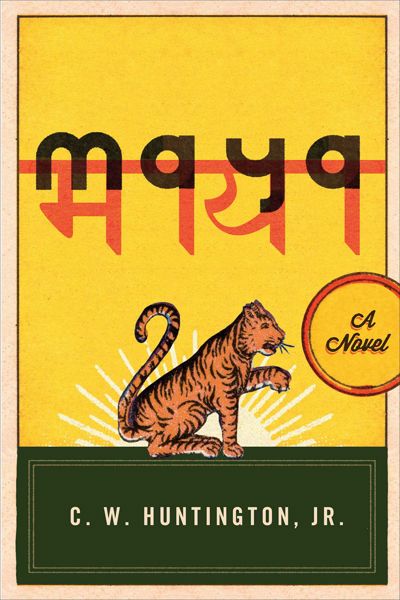
It is 1975 and India is in turmoil. American Stanley Harrington arrives to study Sanskrit philosophy and escape his failing marriage. When he finds himself witness to a violent accident, he begins to question his grip on reality.
Maya introduces us to an entertaining cast of hippies, expats, and Indians of all walks of life. From a hermit hiding in the Himalayan jungle since the days of the British Raj, to an accountant at the Bank of India with a passion for Sanskrit poetry, to the last in a line of brahman scholars, Stanley’s path ultimately leads him to a Tibetan yogi, who enlists the American’s help in translating a mysterious ancient text.
Maya, literally “illusion,” is an extended meditation on the unraveling of identity. Filled with rich observations and arresting reflections, it mines the porous border between memory and imagination.
Reviews
“This is a marvelous book. Huntington brings India alive not as it is, not even as it was, but perfectly as those of us who studied and lived there long ago experienced it. Maya is a loving evocation of a place and time, and a powerfully honest expression of the enthusiasm and pain that attend passions of all kinds, whether for flesh or for truth. Most of all it is a splendid addition to the tradition of stories of how one met one’s guru. This is life not as it is, and yet not otherwise; a perfect evocation of the world of illusion we actually inhabit.”
“Maya is a work of the imagination that presents itself as such, and simultaneously asks the reader to ponder how such imagination differs from what we understand as reality. This playfulness connects Maya to traditional East Asian literary practices—such as the classic dream tale—that are inspired by Buddhist theories of the imagination. This is fiction writing that is as philosophical as it is creative, and which turns art into religion without the preachiness or didacticism.”
“I’ve been waiting for someone to write a contemporary “quest for enlightenment” novel, but didn’t expect it to be this good. It evokes all the color and sensuousness—the feel—of 1970s India, along with the hard-won insights of what reads like a painfully honest memoir leading to a powerful conclusion.”