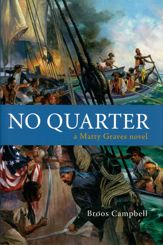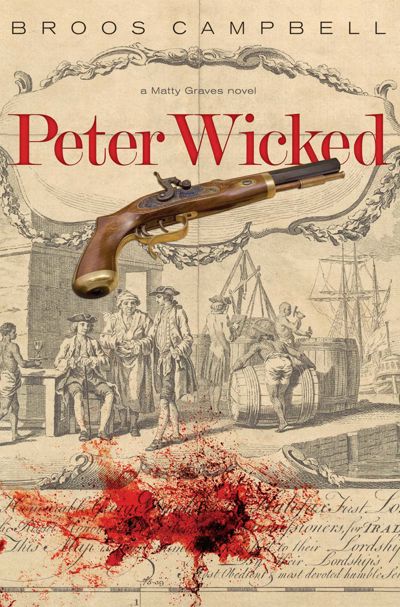
Nautical adventure fans will welcome Campbell's third novel to feature intrepid Matty Graves (afterThe War of Knives). In 1800, the 17-year-old Graves, a bastard and a Negro despite both parents being white, is recalled to Washington City, where his rank is reduced from acting lieutenant to midshipman, and he's questioned about his role in a duel between his friend Peter Wickett and another officer. Graves's fortunes later turn after he's promoted to lieutenant and given his first command, the schooner Tomahawk. On joining the American squadron in Saint-Domingue, he's ordered to capture an American officer who's stolen a naval vessel and turned pirate—Peter Wickett. Graves proves equally brave and resourceful at navigating the bureaucratic minefield of the U.S. Navy and at steering a steady course through the treacherous politics of various nations—Spain, France, England, Denmark—vying for power in the Caribbean.
Description
Set in the early 19th century amid the ships and seamen of a nascent United States Navy, Lieutenant Matty Graves is recovering from his ordeal during the slave rebellion in the French Caribbean colony of Saint-Domingue when he is ordered to Washington to answer questions about the death of his former captain. On home soil, he must deal with the mystery and shame surrounding his birth as well as the attractions of his best friend's sister. But when he is offered a command of his own, he seizes the opportunity to seek his fortune and make a name for himself—even if it means destroying those closest to him.
Reviews
The seafaring saga of American naval lieutenant Matty Graves moves into a third readable volume with Graves recovering from his ordeal during the Saint-Domingue rebellion. Now he must join in the investigation of the relief from command of his previous captain, in which he played a somewhat equivocal part. At the same time, romance beckons, and so does the prospect of a sea command of his own that could make him a fortune in prize money, though at the price of grossly violating his principles. Graves is an entirely plausible character for this era of the American navy—between the Revolution and the War of 1812—when it faced many tasks and a shoestring budget. Campbell, an erstwhile crew member on a contemporary tall ship, the restored Lady Washington, writes a seawise prose and compensates in skilled characterization his tendency toward slow pacing.
Campbell writes with a vivid immediacy and understated authority. . . . His evocation of life aboard a small man-of-war in the young United States Navy during the Quasi-War with France is superb, his characterization is both acute and realistic, his dialogue witty and shrewd . . . a delight to read.