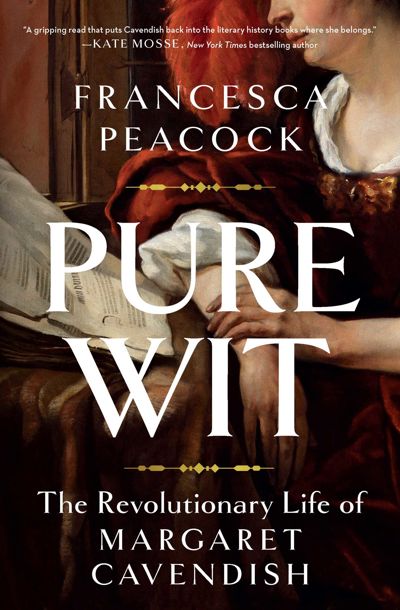
A biography of the remarkable—and in her time scandalous—seventeenth-century writer Margaret Cavendish, who pioneered the science fiction novel.
"My ambition is not only to be Empress, but Authoress of a whole world."—Margaret Cavendish
Margaret Cavendish, then Lucas, was born in 1623 to an aristocratic family. In 1644, as England descended into civil war, she joined the court of the formidable Queen Henrietta Maria at Oxford. With the rest of the court she went into self-imposed exile in France. Her family's wealth and lands were forfeited by Parliament. It was in France that she met her partner, William Cavendish, Marquess of Newcastle-upon-Tyne, a marriage that made her the Duchess of Newcastle and would remain at the heart of both her life and career.
Margaret was a passionate writer. She wrote extensively on gender, science, philosophy, and published under her own name at a time when women simply did not do so. Her greatest work was The Blazing World, published in 1666, a utopian proto-novel that is thought to be one of the earliest works of science fiction that brought together Margaret's talents in poetry, philosophy, and science.
Yet hers is a legacy that has long divided opinion, and history has largely forgotten her, an undeserved fate for a brilliant, courageous proto-feminist. In Pure Wit, Francesca Peacock remedies this omission and shines a spotlight on the fascinating, pioneering, yet often complex and controversial life, of the multi-faceted Margaret Cavendish.



























![Sapiens [Tenth Anniversary Edition] - 18 Feb 2025](https://ingress-cdn.pressreader.com/imageserver/v1/image/books/3eaf90ec-8016-4b48-a5b5-3ca0dfdf169b?width=163)