Yochim drew his last breath while writing this manuscript, using eye-tracking technology because, long before, he'd lost the ability to type or speak. While the disease devastated his body, Yochim's memories of the parks sustained him. . . . Requiem for America's Best Idea is an exceptionally touching, persuasive, and urgent plea for preserving these 'natural cathedrals'--places of wonder, renewal, and transcendence--for future generations.--Foreword Reviews, starred review
Description
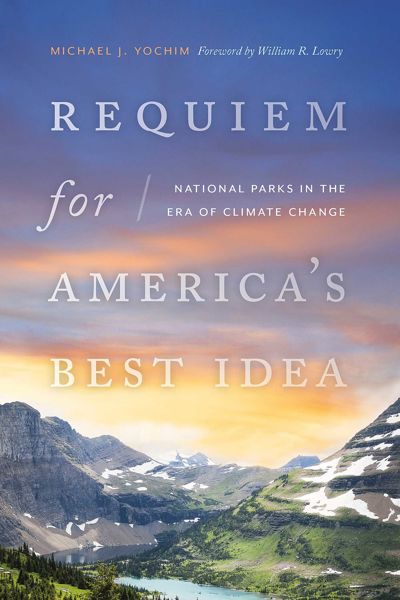
In Requiem for America’s Best Idea, Michael J. Yochim explains how climate change is altering the face of America’s national parks, focusing on current and projected changes to vegetation, wildlife, and the natural conditions in Olympic, Grand Canyon, Glacier, Yellowstone, and Yosemite National Parks—five of the “crown jewels” of our national park system. As Yochim guides the reader from park to park, he immerses us in each park’s beauty and wonder, highlighting the resources now at risk of destruction or permanent alteration.
Yochim worked for the National Park Service for nearly thirty years before being diagnosed with ALS (Lou Gehrig’s disease). It was while fighting the disease that he wrote this last moving testament. Interwoven with descriptions of climate change’s effects on our national parks is the heartbreaking story of how the author, a legendary hiker and backpacker, lost control of his body to the point where he was finally forced to rely on an eye-tracking machine to write.
Climate change is indisputably happening around us, and our parks are changing, often irrevocably. If we don’t act now, Yochim argues, future changes will be much more severe, threatening the very essence of these irreplaceable wonders. America’s failure to meaningfully address the current climate crisis may well squander the vision that acclaimed western writer Wallace Stegner so memorably celebrated: “National parks are the best idea we ever had. Absolutely American, absolutely democratic, they reflect us at our best, rather than our worst.”
Reviews
Yochim writes thoughtfully and with incredible nuance regarding the state of the parks throughout their history. . . . The sense that author and reader alike take some solace in the fresh telling of past tales is palpable. Readers will be glad to read of Yochim in his prime, while he relishes the opportunity to illuminate his beloved parks. . . . This book highlights the beauty of the natural world and its status as an invaluable commodity that all humans share. Recommended for all nature enthusiasts.--Library Journal, starred review
Yochim writes thoughtfully and with incredible nuance regarding the state of the parks throughout their history. . . . The sense that author and reader alike take some solace in the fresh telling of past tales is palpable. Readers will be glad to read of Yochim in his prime, while he relishes the opportunity to illuminate his beloved parks. . . . This book highlights the beauty of the natural world and its status as an invaluable commodity that all humans share. Recommended for all nature enthusiasts.--Library Journal, starred review
What an amazing book. Yochim manages to parallel the long-term destruction of our National Parks and wild lands--due to rising temperatures, receding glaciers, fire, and climate change in general--with his own physical decline due to the curse of ALS. I have been to the places he remembers in this book, and I must say he reconstructs their beauty in ways few of us could. This is truly a tragic work: the story of a man in his last moments alive holding onto a world of beauty that we are destroying.--Kevin Mattson, Connor Study Professor of Contemporary History at Ohio University and author of We're Not Here to Entertain: Punk Rock, Ronald Reagan, and the Real Culture War of 1980s America