"A section on sources and additional notes is a pathway to further investigations into these profound selections. My Zen teacher used to urge us to assimilate teachings into our blood. The Marathi commentary on the Bhagavad Gita contains 9,000 verses, and it is said that experiencing just one of these is enough. Volume 4 of this series provides ample opportunities to take such a journey."
Description
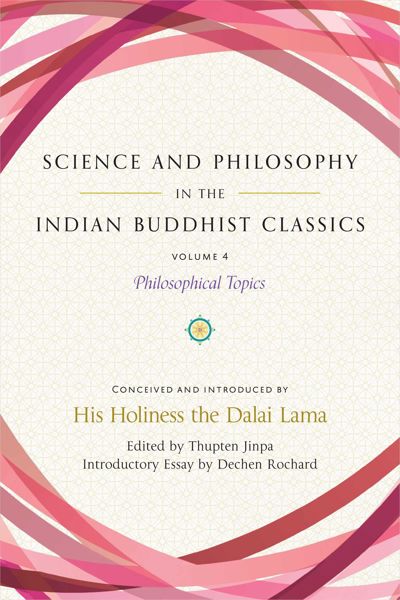
This fourth and final Science and Philosophy in the Indian Buddhist Classics volume provides, through extensive passages, a window into the works of the great thinkers from the flowering of philosophy in classical India.
This is the second philosophy volume in the Science and Philosophy series. Whereas the first philosophy volume presented the views of the non-Buddhist and Buddhist schools in sequence, the present work selects specific topics for consideration, including the nature of the two truths, the analysis of self, the Yogacara explanation of reality, emptiness in the Madhyamaka tradition, a survey of logic and epistemology, and the Buddhist explanation of language and meaning. Like earlier volumes, it provides, through extensive extracts, a window into the works of the masters of the Nalanda tradition. The final section on language is particularly unique and largely crafted by Thupten Jinpa.
Reviews
"The lucid analysis in Philosophical Topics is accessible to beginning students, yet provides an account of sufficient depth to engage the experts. This is a book no serious student of Buddhist philosophy will want to be without.”
“This remarkable series, presenting English translations from key texts in the Indian Buddhist tradition, is introduced by His Holiness the Dalai Lama, who shares his vision of revealing the wisdom of the Indian Buddhist masters and scholars to bring benefit to many others.”
"His Holiness the Dalai Lama and his Compendium Committee comprising some of contemporary Tibet’s most distinguished scholars have produced an elegant compendium of Indian Buddhist literature, interpreted by leading scholars from the Geluk tradition, translated with exemplary clarity, and brought into dialogue with contemporary thought through precise introductions.”