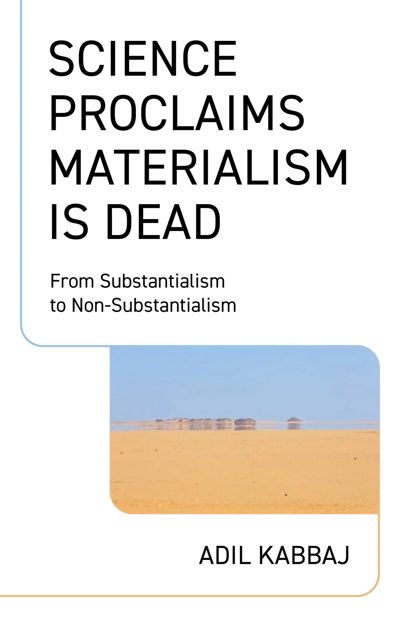
Despite the resounding optimism characterizing the advent of classical mechanistic materialism in the seventeenth century, its failure was unexpectedly sealed with Maxwell’s equations in the nineteenth century. Yet, in the twenty-first century, classical mechanistic materialism remains the Kuhnian paradigm by which we attempt (with ever increasing contortion) to understand quantum mechanics. Why? In Science Proclaims Materialism Dead Adil Kabbaj demonstrates with refreshing clarity how the familiar lamentation that quantum mechanics is ‘spooky’ and impenetrable derives not from the physics itself but rather from the misguided attempt to understand it through the distortive lens of a 400-year-old interpretive paradigm. In considering how modern physics continues to drive the evolution of classical materialism toward a new, fundamentally non-classical worldview, Kabbaj surveys and analyzes our most recent experimental and interpretive advances in quantum mechanics to outline the contours of what this much-needed and long-anticipated paradigm shift might look like. --Michael Epperson, Research Professor & Director of Consortium for Philosophy and the Natural Sciences, and author
Science Proclaims Materialism Is Dead
From Substantialism to Non-Substantialism