“Halbrook touches two hotly contested issues in American constitutional history. It is a contribution to both the Second Amendment debate and the incorporation controversy over the extent the Fourteenth Amendment applies the Bill of Rights, and especially the right to bear arms, to the states. . . . Halbrook has written a book that contributes significantly to our understanding of the linkage between the Second and Fourteenth Amendments. Although his primary concern has been to bring back the Second Amendment from a moribund state in American jurisprudence, Halbrook’s efforts also shed considerable additional light on broader questions.”
Description
Stephen Halbrook's groundbreaking study of freed slaves and the right to bear arms in the aftermath of the Civil War, cited in Supreme Court cases, now with a new foreword by Robert J. Cottrol.
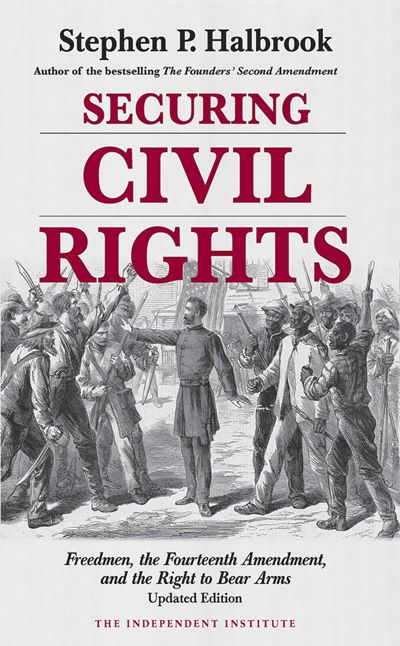
What did it mean to take civil rights seriously—especially the “right to bear arms”—in the years following the abolition of slavery? By quoting legislative debates, Congressional hearings on Ku Klux Klan violence, and newspapers and law books of the time, constitutional scholar Stephen Halbrook shows that both supporters and opponents of the Fourteenth Amendment (1868) believed that it protected all Bill of Rights guarantees—especially the Second Amendment—from infringement by the states.
From the Freedmen’s Bureau Act of 1866 to the Supreme Court’s decision in United States v. Cruikshank (1876), Halbrook paints a vivid portrait of a political and legal system grappling with the true meaning of civil rights.
“Trusting ex-slaves to own firearms was, by any definition, the cutting edge in true belief in civil rights,” Halbrook writes. “It remains to be seen whether contemporary society will accommodate the same rights of the freedmen that the Framers of the Fourteenth Amendment sought to guarantee.”
Although Halbrook concentrates on the right to keep and bear arms, he also includes a comprehensive analysis of the general topic of the relationship between the Bill of Rights and the state governments after the ratification of the Fourteenth Amendment.
Cited by both the U.S. Supreme Court in its historic landmark decision in the McDonald case (2010) and the Washington Supreme Court in State of Washington v. Christopher William Sieyes case (2010) as the leading account of the relationship between the Second Amendment and the states during Reconstruction, Halbrook’s insightful narrative will help a larger audience better understand why earlier generations of Americans viewed the right to bear arms as essential for securing civil rights.
Reviews
“In the aftermath of the Civil War, there was an outpouring of discussion of the Second Amendment in Congress and in public discourse, as people debated whether and how to secure constitutional rights for newly free slaves. See generally S. Halbrook, [Securing Civil Rights:] Freedmen, the Fourteenth Amendment, and the Right to Bear Arms.”
“In his thorough analysis of Congressional debates Halbrook makes quite clear the point that the framers of the Fourteenth Amendment saw Second Amendment guarantees as essential to the political liberty of the individual American citizen.”
“The Heller Court also analyzed post-Civil War case law and commentary to conclude a key purpose of the Fourteenth Amendment was to ensure freed blacks had the right to keep and bear arms. Id. at 2810-11; see generally Stephen P. Halbrook, [Securing Civil Rights:] Freedmen, the Fourteenth Amendment, and the Right to Bear Arms.”