Description

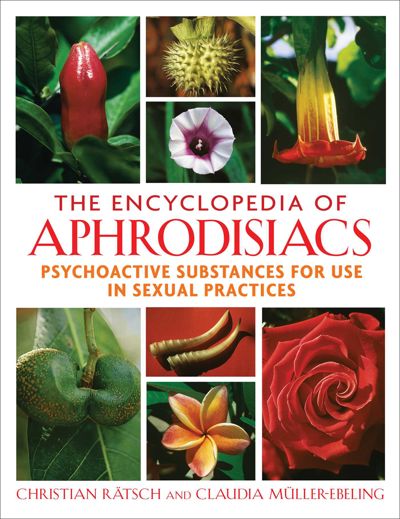
The most comprehensive guide to the botany, pharmacology, cultural, ritual, and personal use of erotically stimulating substances from antiquity to the present day

• Details the use, preparation, and dosage of more than 400 plant, animal, mineral, and synthetic substances, both common and exotic, as well as their botany, science, and legal status

• Explores the historical and present use of aphrodisiacs and their role in sexual practices, culture, and art

• Richly illustrated throughout with more than 800 color photographs

The culmination of more than 30 years of cultural, anthropological, and scientific research, this encyclopedia examines the botany, pharmacology, history, preparation, dosage, and practical use of more than 400 erotically stimulating substances from antiquity to the present day.

From plants and animals that enhance fertility and virility, like celery, snails, or oysters, to substances that induce arousal, like ephedra, opium, or cannabis, the encyclopedia is richly illustrated with more than 800 color photographs--many of which are from the authors’ extensive fieldwork around the world. Exploring individual, medicinal, and ritual use through historic and contemporary artwork, personal accounts, and literature as well as ayurvedic, tantric, shamanic, and European folklore practices and recent pharmacological research, the authors look at the revolving cycle of acceptance and condemnation of aphrodisiacs, the qualities that incur the label of “aphrodisiac,” the role of mind and setting, and the different ways aphrodisiacs stimulate desire--either physically, through the senses and vital organs, or mentally, through heightened awareness and altered consciousness. This comprehensive guide reveals these “remedies of the love goddess” as holy remedies whose proper use can help reestablish harmony with oneself, one’s partner, and the universe.
About the author(s)

Christian Rätsch, Ph.D. (1957 – 2022), was a world-renowned anthropologist and ethnopharmacologist who specialized in the shamanic uses of plants for spiritual as well as medicinal purposes. He studied Mesoamerican languages and cultures and anthropology at the University of Hamburg and spent, altogether, three years of fieldwork among the Lacandone Indians in Chiapas, Mexico, being the only European fluent in their language. He then received a fellowship from the German academic service for foreign research, the Deutsche Akademische Auslandsdienst (DAAD), to realize his doctoral thesis on healing spells and incantations of the Lacandone-Maya at the University of Hamburg, Germany.

In addition to his work in Mexico, his numerous fieldworks have included research in Thailand, Bali, the Seychelles, as well as a long-term study (18 years) on shamanism in Nepal combined with expeditions to Korea and the Peruvian and Colombian Amazon. He also was a scientific anthropological advisor for expeditions organized by German magazines such as GEO and Spektrum der Wissenschaften (Spectrum of Sciences).

Before becoming a full-time author and internationally renowned lecturer, Rätsch worked as professor of anthropology at the University of Bremen and served as consultant advisor for many German museums. Because of his extensive collection of shells, fossils, artifacts, and entheopharmacological items, he had numerous museum expositions on these topics.

He is the author of numerous articles and more than 40 books, including Plants of Love, Gateway to Inner Space, Marijuana Medicine, The Dictionary of Sacred and Magical Plants, and The Encyclopedia of Psychoactive Plants. He is also coauthor of Plants of the Gods, Shamanism and Tantra in the Himalayas, Witchcraft Medicine, Pagan Christmas, and The Encyclopedia of Aphrodisiacs and was editor of the Yearbook of Ethnomedicine and the Study of Consciousness. A former member of the board of advisors of the European College for the Study of Consciousness (ECSC) and former president of the Association of Ethnomedicine, he lived in Hamburg, Germany.

Claudia Müller-Ebeling, Ph.D., is an art historian and anthropologist and coauthor, with Christian Rätsch, of Shamanism and Tantra in the Himalayas, Witchcraft Medicine, and Pagan Christmas. She lives in Hamburg, Germany.

Reviews

“A treasure house of esoteric lore and delightful tidbits of erotica . . . well illustrated and intricately cross-referenced, it is a useful companion for the researcher, aficionado, dabbler, or just plain interested [beginner].”

“An elegant, unsentimental, and extraordinary book. From photographs of African fertility dances to full tantrik instructions, from French phallic ancient stone monuments to a discussion of pheromones, this is the best of its kind I've seen. Highly recommended.”

“Aside from the erotic implications, sexual energy is the universe’s great rejuvenator, making this a good reference tool for intellectually inclined energy workers. It will also interest those who seriously study ancient goddess tradition. Consider displaying it strategically to boost sales of essential oils, incense, candles, and even jewelry (agate, jade, and amber are all considered aphrodisiacs).”

“Three decades of cultural and scientific research inform this panoramic assembly of all substances sexually stimulating. From abalone to zinc, more than 400 lust-inspiring vegetable, animal, mineral, and man-made materials are profiled by the anthropologist authors, with explanations on methods of use, preparation and dosage. Also discussed is their legality and place in history. Including 800 color photographs...this is a valuable and unusual resource. Verdict Containing commentary from the authors’ experiences as well as ‘personal reports of friends and colleagues,’ this tome is a genuine labor of love.”

More by Christian Rätsch

More by Claudia Müller-Ebeling

More Herbal Medications

More Health & Fitness

More Alternative Therapies

More Sexuality