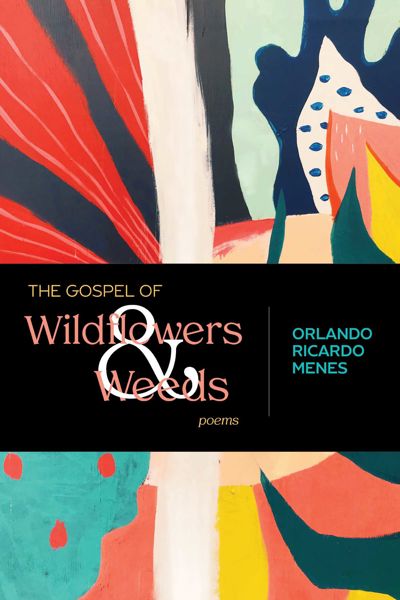
In his sixth full-length collection . . . Orlando Ricardo Menes limns the fervent, sensuous textures of a childhood in Peru, his background as a Cuban American, and works by painters like Carlos Enríquez and writers like Federico García Lorca.--David Woo, Harriet Books
Description
The poems in The Gospel of Wildflowers and Weeds expand the sacred within a baroque, magical-realist poetics that immerses itself in the flora and fauna of the Caribbean and the region’s complex interplay of African, Judeo-Christian, and Taíno (Arawak) cultures. Menes engages with the Catholic sacraments, saints’ lives, and the artistic heritage of this universal faith as well as Cuban art through the use of a variety of poetic styles across the collection. An established poet, he pays homage to those writers who have made him the Caribbean poet that he is, specifically Alejo Carpentier, José Lezama Lima, and even Hart Crane. Readers will want to join Menes on this journey as he travels the globe to explore the fantastic and the marvelous while searching for faith and divine grace.
Reviews
Never are Menes's many speakers without God as they traverse historical and personal landscapes, and never are they without the comfort of literary and artistic ancestors that have paved the way for beauty, truth, and an understanding of the world that transcends any one ideology.--Esteban Rodriguez, EcoTheo
Never are Menes's many speakers without God as they traverse historical and personal landscapes, and never are they without the comfort of literary and artistic ancestors that have paved the way for beauty, truth, and an understanding of the world that transcends any one ideology.--Esteban Rodriguez, EcoTheo
Armpits of martyrs, altar boys, Ave Maria and Teresa of Avila begin this winsome, perspicacious, gritty, eloquent gospel. Ambivalent and detached from his Roman Catholicism, not an uncommon position for a poet in the modern world, I nevertheless felt a passion close to religion here, maybe more Shakespeare than Herbert, but something Godly notwithstanding. Menes states: 'I'm an earthy creature, the son of mud and the grandson of slime.' Our Cuban American Caliban is a cross between Pattiann Rogers and Luis Cernuda. Between cha-cha-chas and sassy bananas, Menes becomes a modern Prospero: 'With these words I take root in the quicksand of diaspora.' Are the best poems homeless? Are modern poets lost prophets? Menes's cornucopia of precise poems overflows with hope and joy and mercy--whether his intention or not, the more I read, the more God I saw.--Spencer Reece, author of The Clerk's Tale and The Road to Emmaus