"Anand elegantly transforms the clinical minutiae of neurological disorders into evocative poetry....an engrossing exploration of the brain’s extraordinary powers and terrifying frailties."
—Publishers Weekly (starred review)
Description
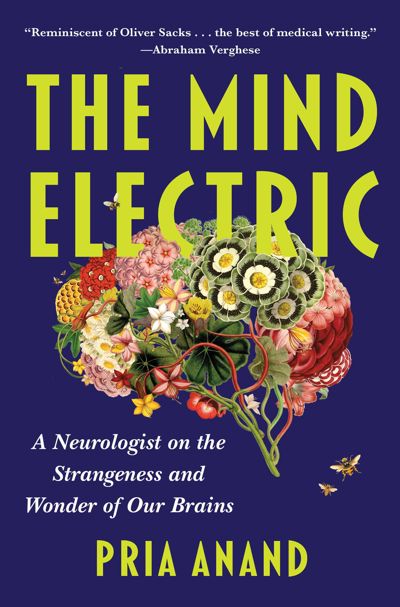
In this collection of medical tales “reminiscent of Oliver Sacks...the best of medical writing” (Abraham Verghese, author of The Covenant of Water), a neurologist reckons with the stories we tell about our brains, and the stories our brains tell us.
A girl believes she has been struck blind for stealing a kiss. A mother watches helplessly as each of her children is replaced by a changeling. A woman is haunted each month by the same four chords of a single song. In neurology, illness is inextricably linked with narrative, the clues to unraveling these mysteries hidden in both the details of a patient's story and the tells of their body.
Stories are etched into the very structure of our brains, coded so deeply that the impulse for storytelling survives and even surges after the most devastating injuries. But our brains are also porous—the stories they concoct shaped by cultural narratives about bodies and illness that permeate the minds of doctors and patients alike. In the history of medicine, some stories are heard, while others—the narratives of women, of Black and brown people, of displaced people, of disempowered people—are too often dismissed.
In The Mind Electric, neurologist Pria Anand reveals—through case study, history, fable, and memoir—all that the medical establishment has overlooked: the complexity and wonder of brains in health and in extremis, and the vast gray area between sanity and insanity, doctor and patient, and illness and wellness, each separated from the next by the thin veneer of a different story.
Moving from the Boston hospital where she treats her patients, to her childhood years in India, to Isla Providencia in the Caribbean and to the Republic of Guinea in West Africa, she demonstrates again and again the compelling paradox at the heart of neurology: that even the most peculiar symptoms can show us something universal about ourselves as humans.
Reviews
"Neurologist Anand artfully stitches together memoir, medical history, neuroscience, and glimpses of people with neurological diseases to introduce readers to different types of wounded brains. Featured disorders include epilepsy, multiple sclerosis, fatal familial insomnia, Creutzfeldt-Jakob disease, cerebellar degeneration, metastatic breast cancer wrapping itself around the brain, and autoimmune encephalitis. The book excels in Anand's ruminations on the art of clinical medicine and her insights into the physician experience. She startlingly confesses, 'To become a doctor, I was becoming less of a human being.' Fully charged...an undeniable grace and humanity permeate these pages that are sure to spark a response in readers."
—Booklist (starred review)
"Drawing on her personal and professional experience as a neurologist, Anand offers a unique and thought-provoking look at the human mind."
—BookBub
“The electricity in The Mind Electric belongs entirely to the human brain—no metaphor necessary. ‘The truth of our bodies and minds is as strange as fiction,’ Anand writes—and the language she uses throughout the book is as evocative as that in any novel…In personal and deeply researched vignettes in the tradition of Oliver Sacks, Anand shows that any comparison between brains and machines will inevitably fall flat…The mind in The Mind Electric is vast, mysterious, and populated. The narratives people construct to traverse it are just as full of wonder.”
?—MIT Technology Review
“Anand’s writing is reminiscent of Oliver Sacks...the best of medical writing. I found the tales of her personal experiences and the dive into history fascinating. The Mind Electric is a compelling read."
—Abraham Verghese, author of The Covenant of Water
“Vivid and entertaining, The Mind Electric takes us into the strange and sometimes wonderful landscape of neurological impairment. This is a beautifully written book.”
—T.M. Luhrmann, Professor of Anthropology, Stanford University