“The Voluntary City is, in several respects, a big book. It is also an important one. The key question is the optimal mode of provision of a whole range of ‘public’ services, including housing, transportation, education, medical care, police and law courts. This book may lead to a reconsideration of how these services might be better provided through voluntary, market-based arrangements than by the ministrations of urban planners and other experts of the modern welfare state.”
Description
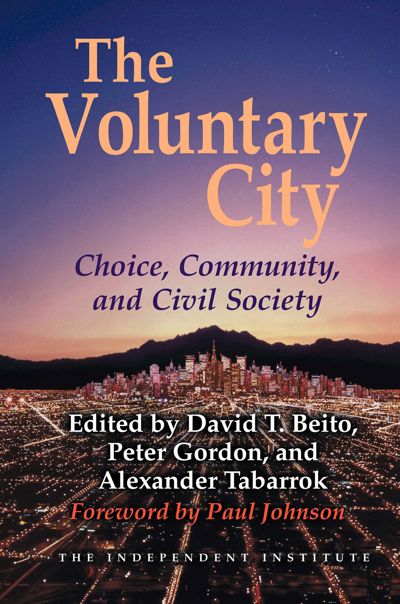
Assembling a rich history and analysis of large-scale, private and voluntary, community-based provision of social services, urban infrastructure, and community governance, this book provides suggestions on how to restore the vitality of city life.
Historically, the city was considered a center of commerce, knowledge and culture, a haven for safety and a place of opportunity. Today, however, cities are widely viewed as centers for crime, homelessness, poverty, unemployment, traffic, pollution, and other social ills. In many cities, government increasingly dominates life, consuming vast resources to cater to special interest groups. Decision-making has become intensely politicized, bureaucratic, and largely unaccountable to the populace.
The Voluntary City provides a rich history and analysis of private, locally based provision of social services, urban infrastructure, and community governance. Such systems have offered superior education, transportation, housing, crime control, recreation, health care, and employment by being more effective, innovative, and responsive than those provided through special interest politics and bureaucracy.
The Voluntary City reveals how the process of providing local public goods through the dynamism of freely competitive, market-based entrepreneurship is unmatched in renewing communities and strengthening the bonds of civil society.
A refreshing challenge to the orthodoxy that government alone can improve community life, The Voluntary City will be an essential reference for anyone interested in the future of cities, including scholars and students, policy-makers, civic and business leaders, and urban citizens.
Reviews
“The exciting and pioneering book, The Voluntary City, sketches out a provocative vision for communities based on civil cooperation and entrepreneurship. Drawing upon a fascinating history of city innovations, the book shows why the de-bureaucratization of urban life is crucial to fostering thriving markets, vibrant neighbors and educational excellence. A book worth reading.”
“The line between what governments should do and what should be left to private action is central to economics. The Voluntary City bundles 14 essays on entities straddling that line, operating apart from state authorities but undertaking, through coordinated voluntary action, tasks now usually performed by state institutions. The best chapters draw fascinating examples from American, British and European history, depicting grassroots organizations and institutions that provided mutual insurance, turnpikes, urban planning, mediation, and policing.”
“This important book, The Voluntary City, tells how civil society was once able, through voluntary associations of like-minded and like-occupied people, to provide public goods that in recent generations have become increasingly subject to governmental initiatives and governmental regulation.”