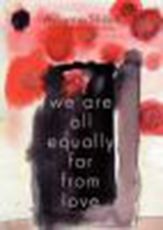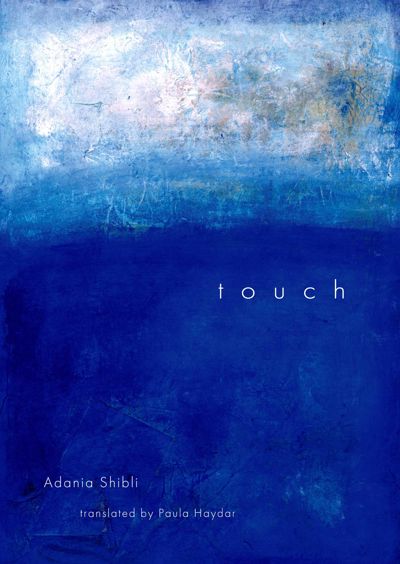
Starred Review. Celebrated young Palestinian writer Shibli-a playwright, author and essayist now located in the UK-makes her American debut with an exquisite, powerful novella that transports readers to her West Bank homeland. In spare prose, Shibli follows an unnamed little girl, the youngest in a large Palestinian family, as she examines her world and tries to understand her place in it. Though focused on the finest details-flakes of rust against skin, the softness of grass-Shibli takes readers to the center of a family and a culture, using the same careful, dispassionate observation to report everyday events like the father's shaving as she does to depict the death of a sibling in area violence. Like a great volume of poetry, Sibli's first novel (her second is forthcoming from Clockroot) has rhythm and unexpected momentum, and cries for re-reading.
Description
Touch centers on a girl, the youngest of nine sisters in a Palestinian family. In the singular world of this novella, this young woman’s everyday experiences resonate until they have become as weighty as any national tragedy. The smallest sensations compel, the events of history only lurk at the edges--the question of Palestine, the massacre at Sabra and Shatila. In a language that feels at once natural and alienated, Shibli breaks with the traditions of modern Arabic fiction, creating a work that has been and will continue to be hailed across literatures. Here every ordinary word, ordinary action is a small stone dropped into water: of inevitable consequence. We find ourselves mesmerized one quiet ripple at a time.
Reviews
"The opening of [Touch]... introduces a fragile little girl, standing alone in her landscape, in the shadow of an old, rusty water tank. She touches one of the supporting legs of the tank, and tiny, cold stains of rust stick to her palm. She stretches her hand out of the shade to warm it up in the sun, and her hand becomes sprinkled with shiny dots of shimmering gold. This is, to my mind, what Adania Shibli does with her amazingly and beguilingly simple language: making the rusty stains of reality disappear, and then making them reappear in writing as stains of gold."--Anton Shammas, author of Arabesques --Anton Shammas
"The most talked-about writer on the West Bank."
--Ahdaf Soueif, author of In the Eye of the Sun
There is much richness and beauty contained in this very short book. Shibli has an exquisite grasp of language that allows her to say a vast amount without writing much at all. Her words are precise and telling. Touch is so well crafted that the reader feels like part of the narrative, present and active in the world the author describes. She is a great talent. ...With her excellent use of language and her rich palette of images and emotional responses, Shibli has emerged as a strong new voice in Arabic literature. Her writing is nonjudgmental; she gives the reader the facts and lets them make their own judgments. Her perspective is that of the reporter, minus the sensationalism...In Touch, Shibli has created a wonderful exposition of daily Palestinian life...Yes, we all live a little differently in different parts of the world, but this work reminds us that there is more that makes us the same than there is that makes us different. In this sense Touch is a triumph.