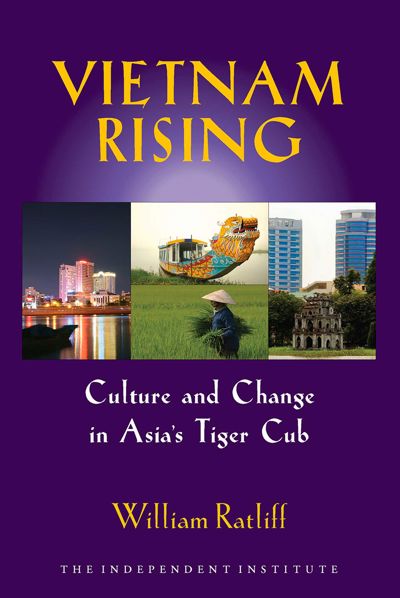
“Vietnam Rising is an informed, wide-ranging, eye-opening survey of economic policies and practices in Vietnam since 1986, when the program of economic reform or Doi Moi was launched. Ratliff argues persuasively that Vietnam’s post-1986 development record is very impressive in some ways but mixed or poor in others. His interesting explanation for this outcome is the contradictory influences of Confucianism, colonialism, nationalism, socialism, communism, capitalism, and globalism in Vietnam. Ratliff writes clearly and engagingly and provides rich empirical detail and documentation to support his arguments.”
Description
From Vietnam’s acceptance into the World Trade Organization to its post-Vietnam War reform and socialist ideals, this overview concisely examines the cultural, political, and economic changes currently at work in Vietnam within a historical context and then discusses the effects such changes have had on businessmen and entrepreneurs.
Vietnam is credited with having one of the “most successful antipoverty campaigns ever undertaken anywhere, raising up about two-thirds of those who lived in poverty two decades ago, by combating both the anti-productive aspects of tradition and the needless poverty still imposed to some degree by the dead economic hand of Ho Chi Minh and his followers.” A country that experienced chronic, centrally imposed food shortages for decades has radically changed course, greatly reduced the percentage of the population living in poverty, from over 70 percent in the mid-1980s to 14.7 percent in 2007. Except for China, Vietnam has had the fastest growing economy in all of Southeast Asia.
In Vietnam Rising, William Ratliff, one of the leading experts on the economics of Southeast Asian countries, examines the remarkable, pro-market, pro-entrepreneurial changes underway in Vietnam. Ratliff then reviews the cultural and historical experiences that provide the foundation for current pro-enterprise reforms, discusses the changes that followed “reunification” at the end of the Vietnam War, and the reforms that began twenty years ago. In the process, Vietnam Rising illuminates the hows and whys of entrepreneurial opportunities and the changes necessary to address the remaining traditional and institutional challenges for creating a truly open, market-based, entrepreneurial climate
Reviews
“The Vietnamese economy is a complex combination of ideology and pragmatism, central planning and entrepreneurship, and isolationism and openness. History and culture have left their imprint, but there has been vast economic change during the past two decades. This accessible and comprehensive book is a must read for anyone interested in economic growth and this increasingly important economy.”
“Vietnam Rising is a much-needed book on a much-neglected topic. Ratliff clearly explains Vietnam’s pro-entrepreneurial evolution, where it’s come from, and the hurdles on the path to where it’s going.”
“In Vietnam Rising, William Ratliff has written an insightful, informative, succinct account of contemporary Vietnam, with an emphasis on the business environment. Anyone planning a business or recreational visit to Vietnam should pack a copy of this book in his carry-on baggage.”