Women Writing the West Willa Cather Award Winner for Scholarly Nonfiction
Description
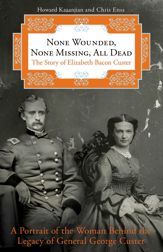
There weren’t many women in the late 1800s who had the opportunity to accompany their husbands on adventures that were so exciting they seemed fictitious. Such was the case for the women married to the officers in General George Armstrong Custer’s Seventh Cavalry. There were seven officers’ wives. They were all good friends who traveled from post to post with one another along with their spouses. Of the seven widows, Elizabeth Custer was the most well-known. As the wife of the commanding officer, Libbie felt it was her duty to be present when the officer’s wives at Fort Lincoln were told their husbands had been killed at the Battle of the Little Bighorn.
The women were overwhelmed with letters of condolence. Most people were sincere in their expressions of sorrow over the widows’ loss. Others were ghoulish souvenir hunters requesting articles of their husbands’ clothing and personal weapons as keepsakes. The press was preoccupied with how the wives of the deceased officers were handling their grief. During the first year after the tragic event, reporters sought them out to learn how they were coping, what plans they had for the future, and what, if anything, they knew about the battle itself. The widows were able to soldier through the scrutiny because they had one another. They confided in each other, cried without apologizing, and discussed their desperate financial situations.
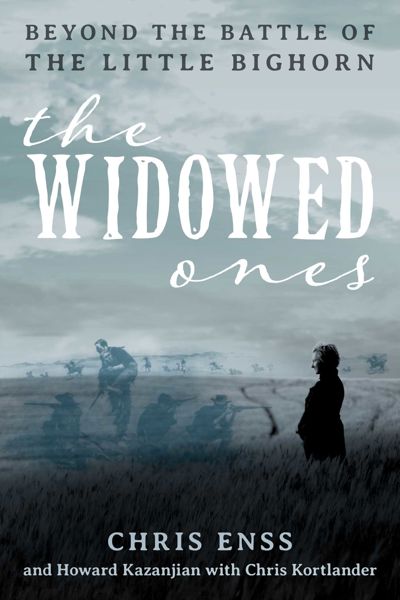
The friendship the bereaved widows had with one another proved to be a critical source of support. The transition from being officers’ wives living at various forts on the wild frontier to being single women with homes of their own was a difficult adjustment. Without one another to depend upon, the time might have been more of a struggle. The Widowed Ones: Beyond the Battle of the Little Bighorn tells the stories of these women and the unique bond they shared through never-before-seen materials from the Elizabeth Custer Library and Museum at Garryowen, Montana, including letters to and from politicians and military leaders to the widows, fellow soldiers and critics of George Custer to the widows, and letters between the widows themselves about when the women first met, the men they married, and their attempts to persevere after the tragedy.
Reviews
Exceptionally well written, organized and presented, "The Widowed Ones: Beyond the Battle of the LittleBighorn" is an ideal and unreservedly recommended addition to 19th Century American Biography supplemental studies curriculum.
America has a mythic story that is inhabited by giants, men like General George Armstrong Custer, Captain Thomas Ward Custer, and Lieutenant James Calhoun. They live large on the silver screen, in literature, and in the American imagination. We can all see them on Last Stand Hill, out of ammunition, their sabers drawn, knowing the end is coming. But there is another story—a story that has largely been ignored for over a century and a half. It’s the powerful and heartrending tale of what happened to the wives they left behind after the Battle of the Little Bighorn. Hounded by the media and tormented by souvenir hunters, they were not allowed to move beyond the sorrow.
Once or twice in a lifetime comes a meticulously researched book that so radically changes your understanding of a historical event it is as though the scales fall from your eyes and you actually see what happened for the first time. The Widowed Ones: Beyond the Battle of the Little Bighorn is that book.
Listen to the women’s side of the story. We promise you will never be the same.
The Widowed Ones is based on a highly original idea; it’s an authentic look into the lives of those left behind after battle. In this case, it’s the Battle of the Little Bighorn, and the main character, in this latest of Chris Enss’s non-fiction books about women of the west, is Elizabeth Custer.
Custer and the officers who fell during battle were dedicated soldiers. But they were also husbands and brothers, sons and fathers. When they died, they left an extraordinary gap in their wives’ lives. There was no income. It was difficult for a woman to find a respectable job. There were children and aging parents to care for. There was the deep grief that each widow carried throughout her life.
The women in The Widowed Ones rode with their husbands into the frontier. They set about making homes in new territory. Elizabeth Custer often rode 70 and 80 miles per day with her husband, and she reveled in the adventure. Other wives chose to stay in camp.
These women had one thing in common—they each lost their partner in a polarizing battle. They formed, what we would call now, a support group. The women of the Widows’ Circle met with each other, commiserated, and supported each other. Those who could not be present stayed in touch by telegraph and letter. They were the only ones who truly understood each other’s situation. They were watched by a worldwide press. Their motto? “Once a widow, always cautious.”
The Widowed Ones is exceptional in several ways, not the least of which is that every detail was carefully researched but it reads as if it were a novel. Very few non-fiction books are difficult for a reader to put down. This is one of those books.