Praise for An Atlas of Impossible Longing:
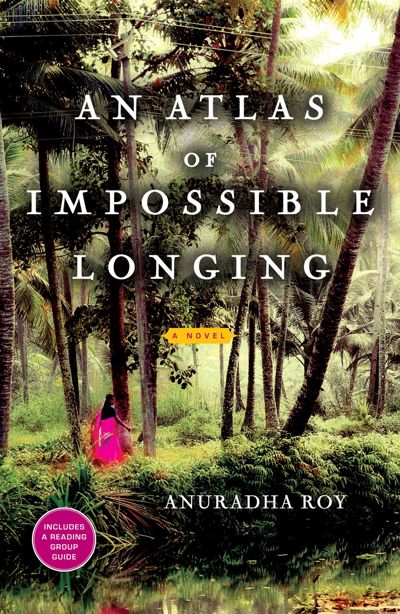
An Atlas of Impossible Longing
A Novel
“This is why we read fiction at all” raves the Washington Post: Family life meets historical romance in this critically acclaimed, “gorgeous, sweeping novel” (Ms Magazine) about two people who find each other when abandoned by everyone else, marking the signal American debut of an award-winning writer who richly deserves her international acclaim.
On the outskirts of a small town in Bengal, a family lives in solitude in their vast new house. Here, lives intertwine and unravel. A widower struggles with his love for an unmarried cousin. Bakul, a motherless daughter, runs wild with Mukunda, an orphan of unknown caste adopted by the family. Confined in a room at the top of the house, a matriarch goes slowly mad; her husband searches for its cause as he shapes and reshapes his garden. As Mukunda and Bakul grow, their intense closeness matures into something else, and Mukunda is banished to Calcutta. He prospers in the turbulent years after Partition, but his thoughts stay with his home, with Bakul, with all that he has lost—and he knows that he must return.
Praise for An Atlas of Impossible Longing:
“Every once in a great while, a novel comes along to remind you why you rummage through shelves in the first place. . . . [A]s you slip into the book’s pages, you sense you are entering a singular creation. . . . And then, suddenly, you are swept away. . . . This, you think, is the feeling you had as you read Great Expectations or Sophie's Choice or The Kite Runner. This is why you read fiction at all.” —The Washington Post
“Roy’s prose does not hit a single wrong note: its restrained beauty sings off the page.” —Neel Mukherjee, Time Magazine
“Refreshing. . . . [Roy] defines her characters quickly and skillfully, she has a keen eye for landscape, and she knows how private lives can suggest the larger shape of the public world.” —The New York Times