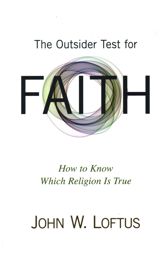
""Loftus’s book is admirable for its bluntness and single-minded drive toward the belief that science--itself a human construct and thus as subject to flaws as religion--is mankind’s saving grace.... Provocative." - Kirkus Reviews (on The End of Christianity) “A wide-ranging and well-argued critique of Christianity." - The Skeptic (on The Christian Delusion) “[T]he reader seeking a comprehensive disproof of Christianity as contemporary evangelicals defend it can do little better than to consult this volume." - Free Inquiry (on Why I Became an Atheist) “A must-read for believers and any atheists who want to debate them. Superbly argued, airtight, and endlessly useful, this should be everyone’s first stop in the god debate." - Richard Carrier, author of Proving History (on The Outsider Test for Faith)
Description
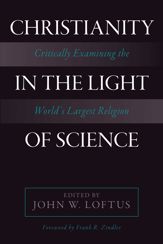
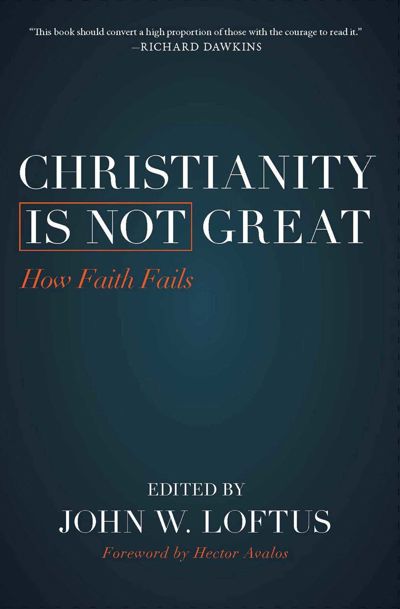
In this new anthology critiquing Christianity, John Loftus-a former minister and now a leading atheist-has brought together an outstanding group of respected scholars who focus on the harms caused by the world's leading religion. The contributors begin by dissecting the many problematic aspects of religious faith generally. They repeatedly demonstrate that, with faith as a foundation, almost anything can be believed or denied. And almost any horrific deed can be committed. The authors then take a good hard look at many of the most important political, institutional, scientific, social, and moral harms committed in the name of Christianity. These range from the historical persecutions of the Inquisition and witch hunts to the current health hazards of faith healing. Finally, the authors answer three common Christian retorts to criticisms from nonbelievers: (1) that atheists cannot judge a harmful action without an objective moral standard; (2) that atheists need faith to solve the world's problems; and (3) that atheists cannot live a good life without faith. Loftus and the contributors generally conclude that, given both the well-documented historical record and ongoing problems raised by the faith, Christianity decisively fails empirical tests of its usefulness to humanity.