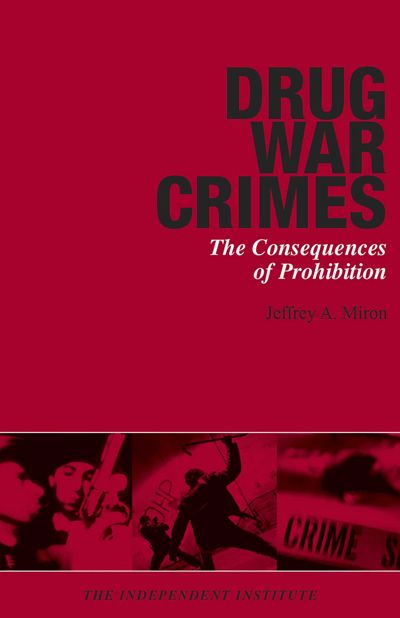
“In Drug War Crimes, Miron offers a powerful economic analysis detailing the irrationality of using the criminal law to prohibit drugs. He offers an equally powerful explanation of the terrible human harm caused by the drug war and advances the only practical alternative to the present failed policies.”
Description
A balanced and sophisticated analysis of the true costs, benefits, and consequences of enforcing drug prohibition.
The "War on Drugs" claims thousands of lives every year in the United States. Each year, the U.S. government spends over $30 billion on the drug war and arrests 1.5 million American citizens on drug-related charges. There are now nearly half a million Americans imprisoned for drug offenses. The official claim is that drug prohibition deters drug use, reduces crime, and improves public health. But is this claim valid?
In Drug War Crimes, Jeffrey Miron offers a balanced and sophisticated analysis of the true costs, benefits, and consequences of drug prohibition. The evidence yields a disturbing finding: the more resources given to the Drug War, the greater the homicide rate. Miron then examines various alternatives to drug prohibition and identifies the most effective solution.
Reviews
“Miron’s arguments are lucid, well-reasoned, and powerful. Legislators and other policy-makers would benefit from his non-politicized, non-moralistic approach; everyone can benefit from reading this important, insightful work.”
“The case for drug legalization has been made before, but Jeffrey Miron strengthens and enriches the case with his analyses of data from the prohibition era and from other countries that strongly corroborate the common sense conclusion that drug prohibition causes far more crime, disease and death than would legalization, or even a retrenchment of the irrational drug war we have been mired in for nearly a century.”
“For economists, drug prohibition is fundamentally implausible. Surely there are more efficient and less intrusive ways of controlling the externalities of drug use. The basic facts of prohibition as practiced in early twenty-first century America only reinforce the impression that this is suboptimal policy. The vast costs associated with drug abuse currently are most visibly the consequence of prohibition rather than drug use. Drug-related crime is driven not primarily by the drugs but by the high prices and the lack of enforceable property rights in illegal markets; the HIV associated with injecting drug use is also a consequence primarily of prohibition rather than heroin use itself. The possible gains from prohibition in terms of harms prevented, if there are any, are neither visible nor conceptually well grounded... The exposition of this slim monograph is non-technical and the goal is clearly to reach a broad audience... In the end, Drug War Crimes will reassure... that regulated legal markets must be better than prohibition.”