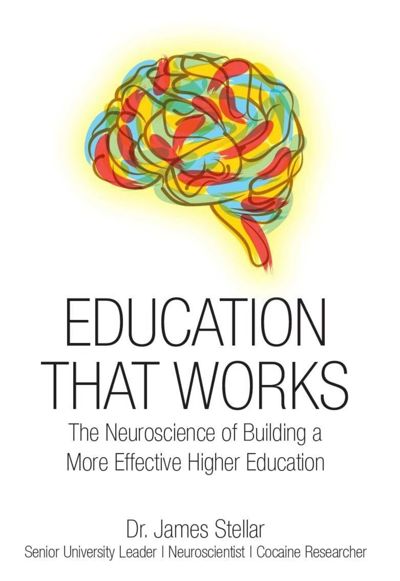
Education That Works
The Neuroscience of Building a More Effective Higher Education
Education That Works addresses the issue of how college and university education can be made more impactful by incorporating a variety of experiential education activities and how this approach is natural given what we know today about how the brain works at multiple levels from modern brain scanners.
The key point is that the brain operates on conscious and unconscious decision-making levels and that the latter is under appreciated in higher education but is well-suited to learning from direct experience in complement to the academic curriculum. Classic among these experiential activities is an internship, but also included are study abroad, undergraduate research, service-learning, and other activities that bring the student’s classroom study into a more real-world project or operation in a way that allows them to apply what they are studying to what they might ultimately do with their college learning when they graduate. The book examines experiential activates from this perspective and looks at how they might be implemented in the university setting. For example, key among the programs is the use of reflection to better integrate these two types of decision-making and important among the impacts is an expected increase in retention and job/school placement after college.