Herbert Hoover, out of office since his defeat in 1932 by Franklin Roosevelt, maintained a strong international reputation due to his achievements as an engineer and his success during World War I and beyond in organizing aid for the starving millions of Europe. And yet, in nearly all accounts of the ferocious debate over American aid to Europe before the United States entered World War II, Hoover’s role has been overlooked.
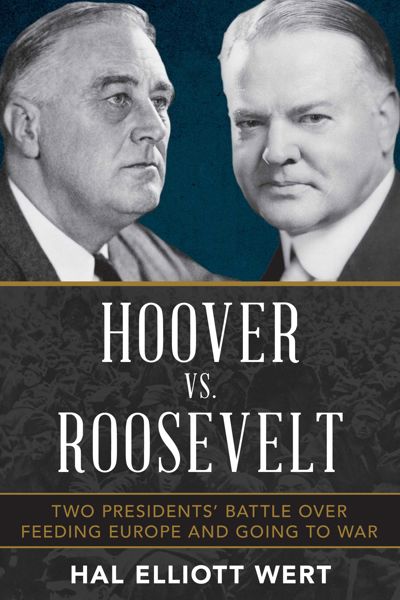
Hoover vs. Roosevelt tells the story of American efforts to stay out of war following the German invasion of Poland. Historian Arthur Schlesinger, Jr., called it “the most savage political debate of my lifetime.” Both men fiercely disagreed on how to respond but the heart of their disagreement was over aid for the huge numbers of Polish refugees flooding into neighboring countries and those that were left behind. Hoover found Roosevelt’s policy of limited emergency aid unacceptable, countering by rapidly assembling teams comprised of talented people who had served in prior Hoover relief organizations. Here for the first time are the courageous stories of those that achieved that success in Romania, Hungary, and Lithuania. When the Soviets invaded Finland on November 30, Hoover assisted the Finns by conducting a Hollywood, star-studded campaign spearheading nation-wide support for this small country. But Hoover’s relief efforts were complicated by his burning ambition to obtain the Republican presidential nomination, a second opportunity to defeat Roosevelt. For Roosevelt, Hoover’s relief successes threatened to derail his limited aid policy which aimed to conserve resources to assist Britain and France and could also cost the president votes. Politics aside, Hoover wars in the first year of the war succeeded in forcing Roosevelt to provide far more aid then intended. Hoover’s victory, the only one achieved in his battles with Roosevelt, accomplished relief for hundreds of thousands in need.
Widely and deeply researched in an array of rarely used secondary and primary sources, both domestic and international. Hoover vs. Roosevelt reveals the story of the two contenders’ battles over feeding Europe and going to war.