“Incisive. . . heartwarming. . . . What a joy the author’s take on it all is. I was happy simply to be in Schoch’s company, wallowing in Sondheim trivia and enjoying a series of smart, close reads.”
—New York Times Book Review
Description
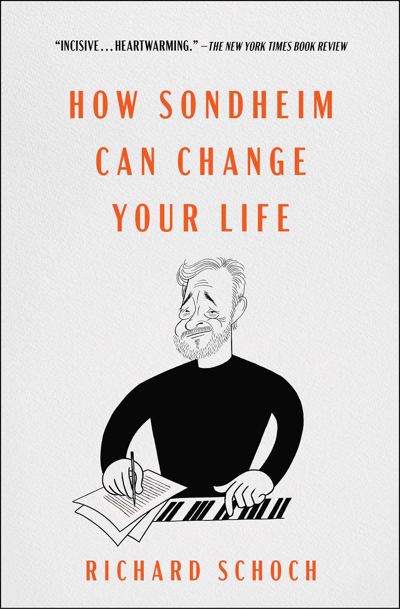
An “incisive…heartwarming” (The New York Times Book Review) exploration of the powerful and universal lessons from the music and lyrics of Stephen Sondheim, the genius behind such musical theater masterworks as Company, West Side Story, and Into the Woods.
Stephen Sondheim died on November 26, 2021, but for countless fans around the world, he is “still here,” to quote one of his lyrics. With acclaimed revivals of his landmark shows occurring around the world and introducing new generations to the man who transformed American musical theater, Sondheim’s legacy has only grown.
How Sondheim Can Change Your Life makes the case that Sondheim’s greatness—beyond the clever lyrics and adventurous music—rests in his ability to tell stories that relate to us all. From Louise’s desire for freedom as Gypsy Rose Lee to Sweeney Todd’s thirst for revenge, we as an audience relate easily to Sondheim’s characters. His works understand us as much as we understand them.
“With clarity and accessibility” (Ben Brantley, former theater critic, The New York Times), How Sondheim Can Change Your Life is rich with stories about productions and iconic performers, deep readings of his music and lyrics, and insights into his creative process. But more than that, it reveals how Sondheim’s works can enrich our own lives.
Reviews
“When it comes to musing on Sondheim, from the intellectual to the introspective, Schoch seems to know it all.”
—The Washington Post
“Even if you were not a Sondheim fan on page 1, there’s a good chance by mid-book you’ll be ordering tickets for the next Sondheim show in town.”
—Minnesota Star Tribune
“Fascinating and wise. . . . offers a fresh way to look at some great works, without ignoring Sondheim’s greatness as a lyricist and composer. Rather, Schoch often demonstrates the subtle brilliance with which Sondheim uses his words and music to illuminate character.”
—Jonathan Mandell, New York Theater