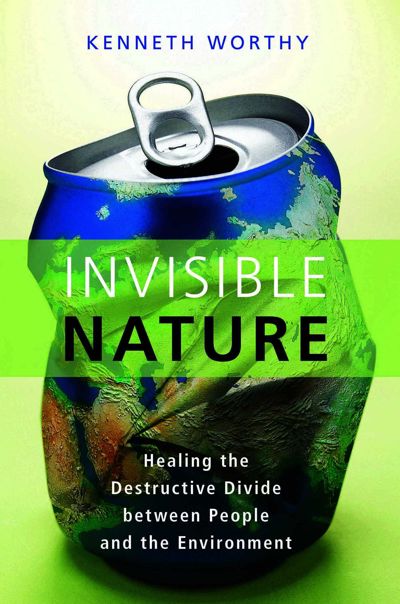
""Required reading for all who want a path to a new future.” —Carolyn Merchant, author of The Death of Nature “The broadest inquiry yet into the origins of our global environmental crisis. . . . A must-read for a fuller understanding of the human predicament and the future of life on earth.” —Richard B. Norgaard, author of Development Betrayed “Finally there is a book that connects the dots between environmental degradation and all the disconnectedness in modern lives. Invisible Nature offers a coherent way to understand how the breaking of our bonds with nature and each other leads to environmental ruin. [It] gives me hope that in its decoding of our precarious predicament, we will find a way to weave back together all the right pieces.” —David Evan Harris, research director at the Institute for the Future, and founder of the Global Lives Project
Description
A revolutionary new understanding of the precarious modern human-nature relationship and a pathto a healthier, more sustainable world. Amidst all the wondrous luxuries of the modern world-smartphones, fast intercontinental travel, Internet movies, fully stocked refrigerators-lies an unnerving fact that may be even more disturbing than all the environmental and social costs of our lifestyles.The fragmentations of our modern lives, our disconnections from nature and from the consequences of our actions, make it difficult to follow our own values and ethics,sowecan no longer be truly ethical beings. When we buy a computer or a hamburger, our impacts ripple across the globe, and, dissociated from them, we can't quite respond. Our personal and professional choices result in damages ranging from radioactive landscapes to disappearing rainforests, but we can't quite see how. Environmental scholar Kenneth Worthytraces the broken pathways between consumers and clean-room worker illnesses, superfund sites in Silicon Valley, and massively contaminated landscapes in rural Asian villages. Hisgroundbreaking, psychologically based explanation confirms that our disconnections make us more destructive and that we must bear witness to nature and our consequences.Invisible Natureshows the way forward: how we can create more involvement in our own food production, more education about how goods are produced and waste is disposed, more direct and deliberative democracy, and greater contact with the nature that sustains us.