Winner, American Battlefield Trust Prize for History
Winner, Library of Virginia Literary Award for Nonfiction
Finalist, Los Angeles Times Book Prize for Biography
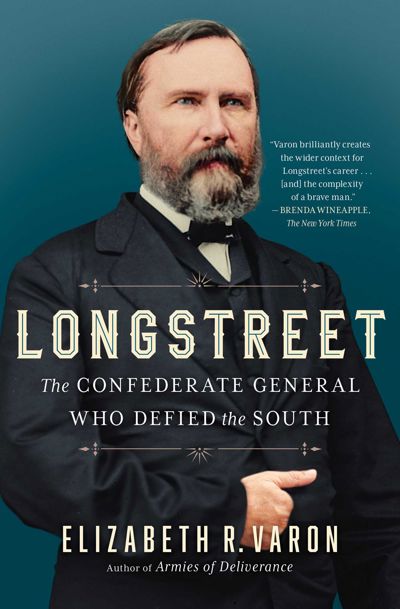
A “compelling portrait” (Jon Meacham, Pulitzer Prize–winning author) of the controversial Confederate general who later embraced Reconstruction and became an outcast in the South.
It was the most remarkable political about-face in American history. During the Civil War, General James Longstreet fought tenaciously for the Confederacy. He was alongside Lee at Gettysburg (and counseled him not to order the ill-fated attacks on entrenched Union forces there). He won a major Confederate victory at Chickamauga and was seriously wounded during a later battle.
After the war, Longstreet moved to New Orleans, where he dramatically changed course. He supported Black voting and joined the newly elected, integrated postwar government in Louisiana. When white supremacists took up arms to oust that government, Longstreet, leading the interracial state militia, did battle against former Confederates. His defiance ignited a firestorm of controversy, as white Southerners branded him a race traitor and blamed him retroactively for the South’s defeat in the Civil War.
Although he was one of the highest-ranking Confederate generals, Longstreet has never been commemorated with statues or other memorials in the South because of his postwar actions in rejecting the Lost Cause mythology and urging racial reconciliation. He is being discovered in the new age of racial reckoning as “one of the most enduringly relevant voices in American history” (The Wall Street Journal). This is the first authoritative biography in decades and the first that “brilliantly creates the wider context for Longstreet’s career” (The New York Times).