"Indigenous people around the world are the only ones with a track record of living in relative balance with their surroundings for thousands of years. There was never a more important time in human history for their perspective and wisdom. The Archipelago of Hope is extremely timely and informative as we confront the reality that the growth imperative of the technologically-driven global economy must be abandoned as we embrace the health of Mother Nature as the source of our survival and health."
Description
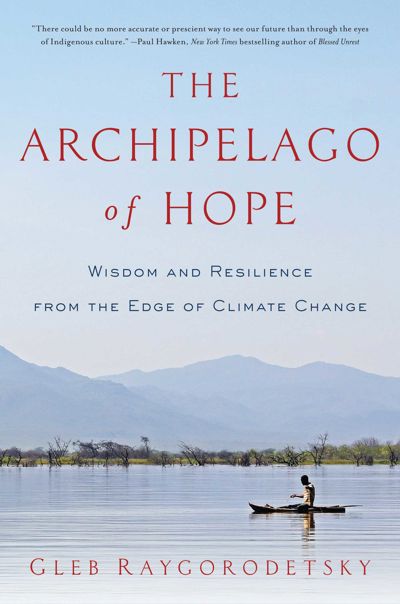
While our politicians argue, the truth is that climate change is already here. Nobody knows this better than Indigenous peoples who, having developed an intimate relationship with ecosystems over generations, have observed these changes for decades. For them, climate change is not an abstract concept or policy issue, but the reality of daily life.After two decades of working with indigenous communities, Gleb Raygorodetsky shows how these communities are actually islands of biological and cultural diversity in the ever-rising sea of development and urbanization. They are an “archipelago of hope” as we enter the Anthropocene, for here lies humankind’s best chance to remember our roots and how to take care of the Earth.We meet the Skolt Sami of Finland, the Nenets and Altai of Russia, the Sapara of Ecuador, the Karen of Myanmar, and the Tla-o-qui-aht of Canada. Intimate portraits of these men and women, youth and elders, emerge against the backdrop of their traditional practices on land and water. Though there are brutal realities—pollution, corruption, forced assimilation—Raygorodetsky's prose resonates with the positive, the adaptive, the spiritual—and hope.
Reviews
"Indigenous people around the world are the only ones with a track record of living in relative balance with their surroundings for thousands of years. There was never a more important time in human history for their perspective and wisdom. The Archipelago of Hope is extremely timely and informative as we confront the reality that the growth imperative of the technologically-driven global economy must be abandoned as we embrace the health of Mother Nature as the source of our survival and health."
"With a storyteller’s gift, Raygorodetsky recounts visits with indigenous peoples from the Arctic to the Amazon, Southeast Asia to Canada, noting that the people who have had the least impact on the earth are suffering the most from human-accelerated climate changes. Raygorodetsky hopes that we can learn from their ways of living in sync with nature and forge more intelligent and compassionate public policies."
"Filled with admiration for those at the center of his study, Raygorodetsky delivers a valuable addition for all environmental collections and readers interested in cultural studies and international relations."












































































![Sapiens [Tenth Anniversary Edition] - 18 Feb 2025](https://ingress-cdn.pressreader.com/imageserver/v1/image/books/3eaf90ec-8016-4b48-a5b5-3ca0dfdf169b?width=163)