Praise for The Shadows of Socrates:
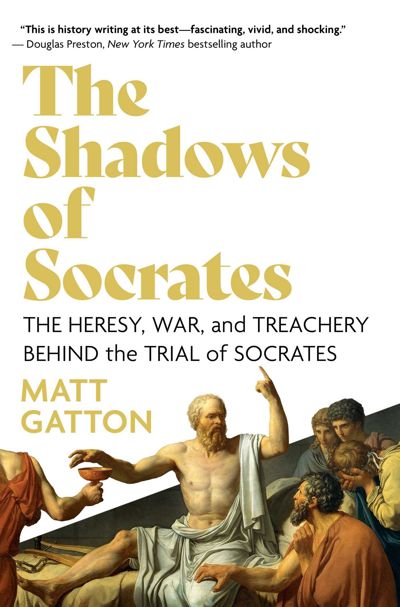
The Shadows of Socrates
The Heresy, War, and Treachery Behind the Trial of Socrates
The death of Socrates may be the most famous unsolved murder in history. Set during the Peloponnesian War, this narrative solves that mystery, revealing for the first time how the philosopher was set up, who did it, and why.
The influence of the ancient Greek philosopher Socrates has been profound. Even today, over two thousand years after his death, he remains one of the most renowned humans to have ever lived, occupying a stratum with the likes of Buddha, Jesus, Muhammed, Confucius, and Moses. It may not be too much to say that Socrates is the single most recognizable name in the history of all humanity.
The death of Socrates is, in some ways, the most famous unsolved murder mystery in history. This book will solve the mystery, revealing for the first time how he was set up, who did it, and why. What follows is not a philosophical tract but something closer to a novel—made all the more compelling because it’s true. This is a real-life whodunit intertwined with a long running war, rivalry, sex addiction, betrayal, sedition, starvation, and epic bravery. Socrates was the most rational of men living in the most irrational of times.
There is another side to this story: impiety, lack of reverence for the gods, was a religious crime. From the perspective of the religious authorities of the time, the charge of impiety against Socrates was warranted, his trial just, and the penalty appropriate. The priests did not tolerate scrutiny, even in the form of philosophical critique. To understand what happened and how it happened, we have to come to terms with the motives of the priests, and as importantly, Socrates’ motives in provoking them. His trial is perhaps first, but not last, great battle between philosophy and religion.
The repercussions of this ancient epic apply equally to the West today, as Athens also endured pendulum swings between democracy and oligarchy—always with bloodshed, and never with Socrates’s approval.
Praise for The Shadows of Socrates:
"Mr. Gatton presents the trial and death of the world’s most famous philosopher as a murder mystery. A reviewer has to be careful not to spoil the impact of this persuasive book, as it is the search for a solution to a crime that should not be shortened by a summary of the evidence."
"This book could save our democracy."
“A thrilling and important epiphany of a book. Like Socrates himself—the stubborn philosophical hero of this reexamination of the most famous trial of all time—Matt Gatton leads us out of the confusing shadows of historical misperception into the blinding light of reasoned analysis and understanding. In Gatton’s skillful hands, the vexed trial of Socrates becomes not only an intelligible political and legal event but itself a powerful indictment of religious control and power over the human mind.”