Provides the most complete elucidation of Cormac McCarthy's complex use of Gnostic ideas that we are likely to see. . . . A Bloody and Barbarous God is a masterful, nearly exhaustive tour de force of scholarship, and it takes its place on the short shelf of indispensable critical appraisals of Cormac McCarthy.
--Reading Religion
Description
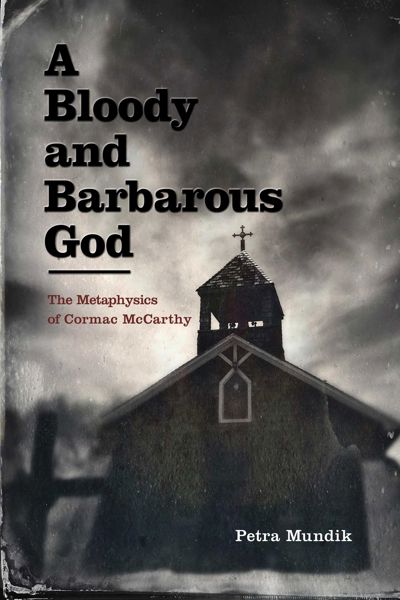
A Bloody and Barbarous God investigates the relationship between gnosticism, a system of thought that argues that the cosmos is evil and that the human spirit must strive for liberation from manifest existence, and the perennial philosophy, a study of the highest common factor in all esoteric religions, and how these traditions have influenced the later novels of Cormac McCarthy, namely, Blood Meridian, All the Pretty Horses, The Crossing, Cities of the Plain, No Country for Old Men, and The Road. Mundik argues that McCarthy continually strives to evolve an explanatory theodicy throughout his work, and that his novels are, to a lesser or greater extent, concerned with the meaning of human existence in relation to the presence of evil and the nature of the divine.
Reviews
An extensive journey through McCarthy's later novels, with Mundik as a priest taking the reader beneath the rich and complex surface to reveal the secrets hidden therein. . . . A Bloody and Barbarous God serves as an essential resource and valuable companion.
--South Central Review
Wise, carefully researched, and valuable interpretations of Cormac McCarthy.
--Southwestern American Literature
""Mundik's book tackles the challenging complexity and darkness of McCarthy's metaphysical vision and finds a consistency of vision throughout his novels that is both profound and--in all senses of the word--illuminating."
--Lydia R. Cooper, author of No More Heroes: Narrative Perspective and Morality in Cormac McCarthy"