Garcia provides a highly original and penetrating reassessment of [Wright and Rodriguez], as well as a careful study of how Hispanic and black American literatures are integrally related to each other. . . . An indispensable resource for generalists and specialists alike.--African American Review
Description
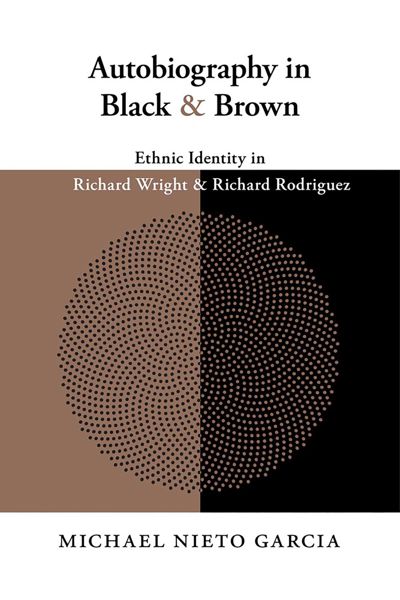
Richard Wright was the grandson of slaves, Richard Rodriguez the son of immigrants. One black, the other brown, each author prominently displays his race in the title of his autobiography: Black Boy and Brown. Wright was a radical left winger, while Rodriguez is widely viewed as a reactionary. Despite their differences, Michael Nieto Garcia points out, the two share a preoccupation with issues of agency, class struggle, ethnic identity, the search for community, and the quest for social justice. Garcia’s study, the first to compare these two widely read writers, argues that ethnic autobiography reflects the complexity of ethnic identity, revealing a narrative self that is bound to a visible ethnicity yet is also protean and free.
These autobiographies, according to Garcia, exemplify the tensions and contradictions inherent in identity. In their presentation of the self we see the rejection not only of essentialized notions of ethnic authenticity but also of any conception of an ethnic self that is not also communally derived. The image reflected in the mirror of autobiography also reminds us that consciousness itself is altered by our reading, and that the construction of modern ethnicity is shaped to a considerable extent by print culture.
Reviews
""In his insightful book, Garcia . . . demonstrates how Wright and Rodriguez use and yet go beyond racialized notions of consciousness--namely, W. E. B. Du Bois's theorizations of 'double consciousness' and Gloria Anzuldúa's of multiple consciousness and mestizaje--to illuminate the complexities of ethnic identities, (masculine) embodiment, and (racialized) subjectivity and personhood that speak to and about communities of color and society at large. . . . Highly recommended."--Choice"
An important contribution to the study of American life writing and an invaluable reassessment of the work of Richard Wright and Richard Rodriguez.--Robert J. Butler, coeditor of The Richard Wright Encyclopedia
Garcia's book sweeps us off our feet. With great acuity he offers a remarkable and total vision of how the autobiographical format in the hands of such masters as Wright and Rodriguez radically reshapes our sense of what it means to be Black and Brown in the United States. The breadth and depth of Garcia's erudition is breathtaking. Never again can we consider race in the United States in black and white terms. Extraordinary!--Frederick Luis Aldama, author of The Routledge Concise History of Latino/a Literature