Lewis E. Lehrman’s arresting and deeply researched study of the Anglo-American alliance during the Second World War brilliantly establishes how Roosevelt and Churchill—sometimes willing to use back channels and bypass conventional diplomatic authority—found and relied on the right people to smooth relations between the two countries. Rich in historical immediacy, Churchill, Roosevelt & Company demonstrates how generals, diplomats, spies, businessmen, economists, and other key figures served the needs of both Prime Minister and President in their unyielding defense of democratic government. Not least, the book delivers a powerful reminder of the contingent role of human interaction and personal chemistry in determining the course of historical events. - Prof. Richard Carwardine, Rhodes Professor of American History at Oxford University
Description
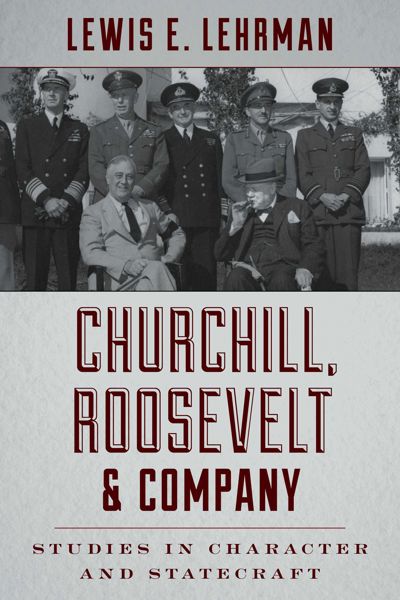
During World War II the “special relationship” between the United States and Great Britain cemented the alliance that won the war. But the ultimate victory of that partnership has obscured many of the conflicts behind Franklin Roosevelt’s grins and Winston Churchill’s victory signs, the clashes of principles and especially personalities between and within the two nations.
Synthesizing an impressive variety of sources from memoirs and letters to histories and biographies, Lewis Lehrman explains how the Anglo-American alliance worked--and occasionally did not work--by presenting portraits and case studies of the men who worked the back channels and back rooms, the secretaries and under secretaries, ambassadors and ministers, responsible for carrying out Roosevelt’s and Churchill’s agendas while also pursuing their own and thwarting others’. This was the domain of Joseph Kennedy, American ambassador to England often at odds with his boss; spymasters William Donovan and William Stephenson; Secretary of State Cordell Hull, whom FDR frequently bypassed in favor of Under Secretary Sumner Welles; British ambassadors Lord Lothian and Lord Halifax; and, above them all, Roosevelt and Churchill, who had the difficult task, not always well performed, of managing their subordinates and who frequently chose to conduct foreign policy directly between themselves. Scrupulous in its research and fair in its judgments, Lehrman’s book reveals the personal diplomacy at the core of the Anglo-American alliance.
Reviews
Lewis E. Lehrman demonstrates an almost uncanny feel for all the senior personalities around Winston Churchill and Franklin D. Roosevelt during the Second World War; he understands their characters, viewpoints and motives and has an enlightening insight into all of them, coupled with an impressively objective judiciousness. I didn’t think much more of genuine value could be written about this glittering galere—one of the great ‘genius clusters’ of history—but this well-researched, well-written and profoundly thoughtful book proves me wrong. - Prof. Andrew Roberts, King's College, London, author of Masters and Commanders: How Churchill, Roosevelt, Marshall and Alanbrooke Won the War in the West
Lewis E. Lehrman has done a lot of business in his life, both public and private. He is also an accomplished scholar and historian. In this book, Churchill, Roosevelt & Company, he describes the business of war and politics during the Second World War. The focus is on Churchill and FDR and their Anglo-American team which led the war effort in the West. Mr. Lehrman is exceptionally well-qualified, and his excellent book is proof of that fact. - Prof. Larry Arnn, former research director of the multi-volume Martin Gilbert authorized biography of Winston Churchill; author of Churchill's Trial; now president of Hillsdale College and responsible for the Churchill project at Hillsdale College
Lewis Lehrman's Churchill, Roosevelt & Company offers a detailed look at the special relationship, especially during World War II, when Anglo-American cooperation achieved its most impressive results and faced its most formidable challenges. The book is packed with fascinating detail and illuminates not only the past but the challenges of the present day.