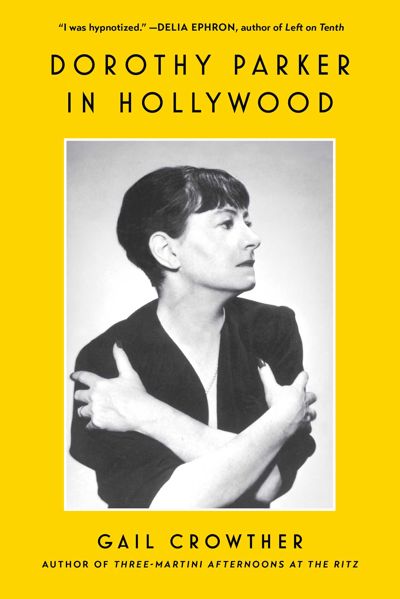
"[A] welcome effort to expand our view of the writer's career. The film industry's influence on Parker, as well as hers on it, is a juicy subject that's ripe for evaluation in our own screen-obsessed age." —Wall Street Journal
Description
An expansive, illuminating, and “welcome addition to understand” (Shelf Awareness) the legendary writer Dorothy Parker, this unique biography explores her life and legacy in Hollywood—from the author of the “fascinating” (Town & Country) Three Martini Afternoons at the Ritz.
The glamorous extravagances and devasting lows of her time in Hollywood are revealed as never before in this “ambitious, thoughtfully researched” (Kirkus Reviews) biography of Dorothy Parker—from leaving New York City to work on numerous classic screenplays such as the 1937 A Star Is Born to the devastation of alcoholism, a miscarriage, and her husband’s suicide. Parker’s involvement with anti-fascist and anti-racist groups, which led to her ultimate blacklisting, and her early work in the civil rights movement that inspired her to leave her entire estate to the NAACP are also explored as never before.
“Briskly detailed, fluently insightful, and dramatically reorienting” (Booklist, starred review), Dorothy Parker in Hollywood brings the iconic writer back to life on the page in all her wit, grit, and brilliance.
Reviews
“This is a terrific book about a terrifying woman. Dorothy Parker broke boundaries, landed in the center of literary New York, and was seduced by the money and vanity of Hollywood. She was witty and brilliant, but with a cruel streak that blossomed when she drank. She had so much talent, and such a lack of control. This is a lesson in fame an in the destructiveness of your own demons. I was hypnotized by it.”—Delia Ephron, author of Left on Tenth
“[A] briskly detailed, fluently insightful, and dramatically reorienting biography . . . An eye-opening reclamation and appreciation.” —Booklist, starred review
“Crowther thoughtfully considers Parker’s ambivalence about Hollywood through her poetry and fiction, failed romances, miscarriages, suicide attempts and activism. Parker was often abrasive, but Crowther considers Parker empathetically, as a sui generis who resisted becoming a cog in the filmmaking machinery.”—Los Angeles Times











![Autobiography of a Face [Thirtieth Anniversary Edition] - 3 Dec 2024](https://ingress-cdn.pressreader.com/imageserver/v1/image/books/15059d58-a0db-4486-b90f-802d2ec1a915?width=163)