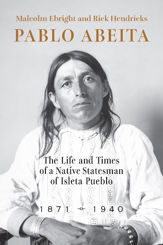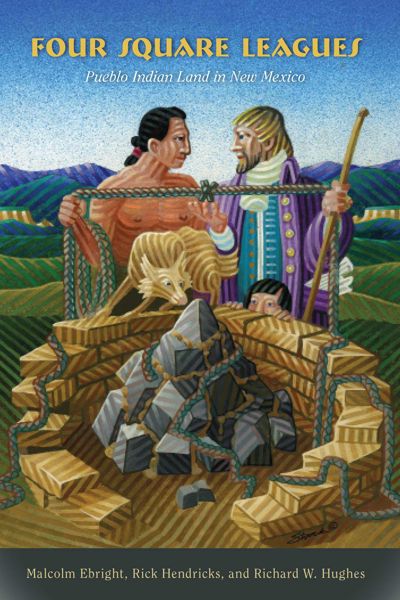
A readable, engaging history of the New Mexican Pueblos' work to maintain their land holdings over the last four hundred years. From the legally nebulous but widely recognized 'Pueblo league' under Spanish colonization to the reclamation of Blue Lake by Taos Pueblo in 1970, the authors provide a detailed history of the failures and successes of land reclamation for the Pueblo people in New Mexico under three different governments. Their analysis will be valuable to Indian communities working on maintaining or reclaiming their lands throughout the United States, as well as the lawyers and politicians involved in these legal proceedings.--True West
Description
This long-awaited book is the most detailed and up-to-date account of the complex history of Pueblo Indian land in New Mexico, beginning in the late seventeenth century and continuing to the present day. The authors have scoured documents and legal decisions to trace the rise of the mysterious Pueblo League between 1700 and 1821 as the basis of Pueblo land under Spanish rule. They have also provided a detailed analysis of Pueblo lands after 1821 to determine how the Pueblos and their non-Indian neighbors reacted to the change from Spanish to Mexican and then to U.S. sovereignty.
Characterized by success stories of protection of Pueblo land as well as by centuries of encroachment by non-American Indians on Pueblo lands and resources, this is a uniquely New Mexican history that also reflects issues of indigenous land tenure that vex contested territories all over the world.
Genres
Pages496
Released2014
LanguageEnglish
PublisherUniversity of New Mexico Press
ISBN9780826354730
SellerSimon & Schuster
About the author(s)
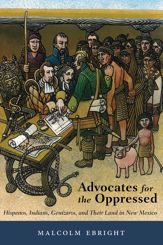
Malcolm Ebright is a historian, an attorney, and the director of the Center for Land Grant Studies. His books include Advocates for the Oppressed: Hispanos, Indians, Genízaros, and Their Land in New Mexico; The Witches of Abiquiu: The Governor, the Priest, the Genízaro Indians, and the Devil; Four Square Leagues: Pueblo Indian Land in New Mexico; and Pueblo Sovereignty: Indian Land and Water in New Mexico and Texas.
Rick Hendricks served as the New Mexico State Historian from 2010 through 2019. His books include The Witches of Abiquiu: The Governor, the Priest, the Genízaro Indians, and the Devil; The Navajos in 1705: Roque Madrid's Campaign Journal; Four Square Leagues: Pueblo Indian Land in New Mexico; and Pueblo Sovereignty: Indian Land and Water in New Mexico and Texas.
Richard W. Hughes is an attorney in Santa Fe specializing in Indian law. He is a partner in the Rothstein law firm.