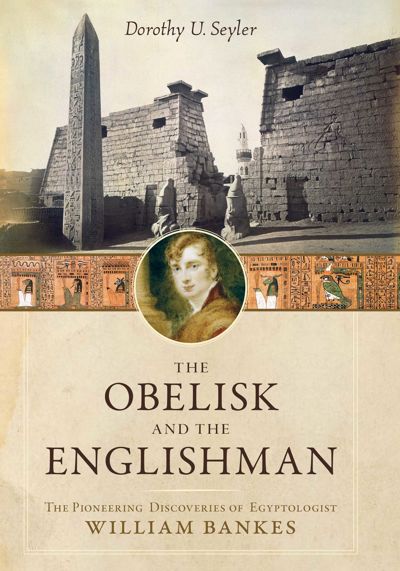
Obelisk and the Englishman

The Pioneering Discoveries of Egyptologist William Bankes
Description

William John Bankes (1786-1855) was a pioneer in the nascent study of the language, history, and civilization of ancient Egypt. At the Abydos Temple he discovered the King List - a wall of cartouches listing Egyptian kings in chronological order - which was vital to the decoding of Egyptian hieroglyphs. At Philae he uncovered a fallen obelisk, which he arranged to be transported back to England. And in modern-day Jordan he was the first European to make sketches and site plans of the "lost" city of Petra. Bankes's life was rich and full, and his discoveries have proven to be quite valuable and influential. But, living in an era when homosexuality was a capital offense, he was persecuted for being gay and threatened with imprisonment and execution. His decision to travel and pursue his love of art and architecture went against his father's wishes that he follow in his footsteps and become a politician. Despite such obstacles, Bankes's pioneering work on ancient temples and artifacts now enriches the knowledge of modern Egyptologists, and his art collection and decorative talents can be enjoyed by those who visit his home, a National Trust estate - with the obelisk from Philae still raised on the south lawn. Enhanced by many of Bankes's drawings and paintings, this engaging story is full of vivid detail about the beginnings of Egyptology, Regency England, and a fascinating individual, and it sets the record straight about Bankes's crucial role in setting the stage for the work of later scholars.

Reviews

""Dorothy Seyler’s fluent and readable book on William Bankes explores the life of a leading player in the early decades of Egyptology both in Egypt and afterwards in England. A must for anyone interested in the decipherment of hieroglyphic script and the collecting of Egyptian antiquities by the British in the early nineteenth century.” —Andrew Oliver, author of American Travelers on the Nile “Through the exploits of the adventurer and scholar William Bankes, the reader is led into ancient Egypt as well as 19th-century England. Bankes’s archaeological labors uncovering sacred treasures in the burning desert are here juxtaposed to his difficult service in Parliament against a backdrop of political intrigue and unforgiving moral and cultural mores. The view of the two worlds, as seen through the eyes of the talented but complicated Bankes, provides enlightening and entertaining reading.” —Solveig Eggerz, author of Seal Woman

More Art