“An invaluable tool for anyone who values religious liberty and a healthy culture for the family.” —National Catholic Register
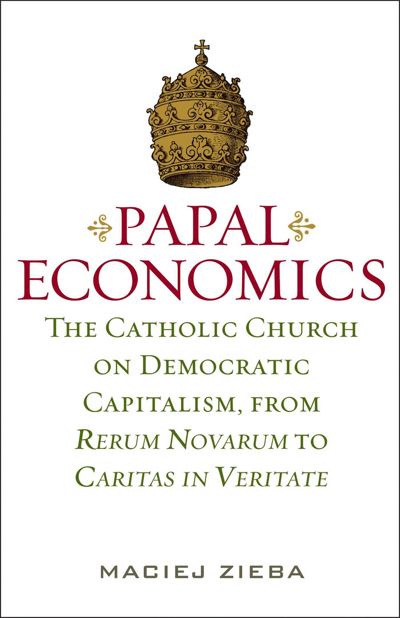
Papal Economics
The Catholic Church on Democratic Capitalism, from Rerum Novarum to Caritas in Veritate
Papal Economics corrects the record about one of the most important—but least understood—authorities on capitalism and democracy: the Catholic Church.
Maciej Zieba, OP—a leading interpreter of the thought of Pope John Paul II—takes readers on an enlightening tour through the Catholic Church’s social teaching on economics and governance. Examining papal pronouncements from the late nineteenth century to the present, Zieba shows that the Church displays a profound understanding of democracy and support for free markets. But this praise is not unqualified—a major reason why secular commentators of all stripes misinterpret Catholic social teaching.
Updated with a brand-new afterword explaining the controversial economic teachings of Pope Francis, Papal Economics is the essential book for understanding the proper path forward.
“An invaluable tool for anyone who values religious liberty and a healthy culture for the family.” —National Catholic Register
“An invaluable tool for anyone who values religious liberty and a healthy culture for the family.” —National Catholic Register
“Powerful . . . Should move the Catholic discussion of twenty-first-century economics beyond the familiar refrains.” —George Weigel, author of Witness to Hope: The Biography of Pope John Paul II
“Powerful . . . Should move the Catholic discussion of twenty-first-century economics beyond the familiar refrains.” —George Weigel, author of Witness to Hope: The Biography of Pope John Paul II
“An invaluable resource for those who want to have a better understanding of the Catholic social justice tradition.” —First Things
“An invaluable resource for those who want to have a better understanding of the Catholic social justice tradition.” —First Things
“[A] clear, well-balanced survey.” —Robert Royal, president of the Faith Reason Institute
“[A] clear, well-balanced survey.” —Robert Royal, president of the Faith Reason Institute
“A thorough treatment of economics and politics in Catholic social thought.” —Public Discourse
“A thorough treatment of economics and politics in Catholic social thought.” —Public Discourse