“Lawrence Powell has brought together a wonderful group of leading insurance and risk scholars to produce the most insightful book on property and casualty insurance industry in many years. Risky Business explains why market-based insurance should be celebrated for its innovation and competitiveness. Instead it is a constant target for politically motivated critics and politicians who excoriate the industry. The book critically examines the continual call for ever-more regulation that harms the public by driving up the cost of insurance and limiting competition and innovation.”
Description
Today’s insurance regulation in the United States is at a crossroads: while some segments of the insurance industry are moving away from a state-based approach toward regulation, others favor a greater role for the federal government—despite the opposition from other stakeholders. Written by leading scholars in risk management, this book addresses some of the most important questions facing the future of state and federal regulation of the insurance industry.
Insurance regulation in the United States is at a crossroads. It used to be a given that the insurance industry would resist efforts to move away from state-based approaches toward regulation—but no more. Some now favor a greater role for the federal government, while others oppose calls to transition to a federal system. In any case, might not a competitive and innovative system of free-market insurance be preferable to best serve the interests of consumers?
The current debate over insurance regulation is increasingly a struggle between competing interest groups and opposing ideologies about the proper scope of government—a conflict that affects individuals’ decisions about how much risk to undertake, whether those decisions involve driving a motorcycle in dense urban traffic or building a home in a flood, fire, hurricane or other high-risk zone.
But what types of reforms would best serve the interests of consumers? And what lessons can be learned from previous reform efforts?
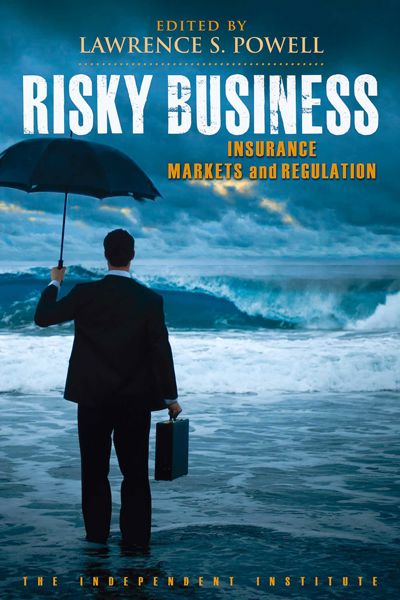
In Risky Business: Insurance Markets and Regulation, edited by Lawrence S. Powell, leading scholars in risk management address some of the most important questions about the future of insurance regulation and the potential for market-based alternatives. The book examines not only the impetus behind various reform proposals, but also the historical development of insurance regulation in the United States. In so doing, Risky Business examines alternative regulatory and deregulatory frameworks used in the United States and in the European Union, and whether such options are beneficial or not.
Reviews
“Did you ever wonder why public officials representing the Gulf Coast states pressured some of the nation’s leading property and casualty insurers into paying claims for damage caused by Hurricane Katrina, even though some hazards clearly were not covered? Or why Congress authorized grants up to $150,000 to homeowners on floodplains that were not covered by federal flood insurance even though such insurance is mandatory? Or why the nearly bankrupt National Flood Insurance Program does not cover the cost of replacing real property, but only the borrower’s remaining mortgage balance? Many such important questions about property and casualty insurance in the U.S. are asked and answered by the scholars assembled by Lawrence Powell in Risky Business. This superb book traces the serious problems facing consumers in insuring properties against fire, flood, earthquakes and other hazards under the Byzantine and politicized regulatory regimes in which insurance companies operate. Risky Business documents the many problems created by today’s regulations, offers and evaluates market-based alternatives, and points the way to reform. It is must reading for anyone interested in the economics and politics of government regulation.”
“Risky Business is a very timely and important book. Each of its well-crafted chapters examines a distinct aspect of the insurance regulatory debate currently taking place, but all lead to the same conclusion: insurance regulation should not be used to distort a well-functioning private insurance market. As the authors point out, insurance regulation can distort insurance markets in ways that hurt consumers, the very people intended to be benefitted. This book should be read by anyone seriously looking at how to effectively benefit and protect insurance consumers.”
“Risky Business is an excellent collection that offers thorough and thoughtful discourse on the current state of evolution in insurance regulation in the United States. Policymakers, consumers, insurance academics, researchers, students, and other interested parties may find this book highly relevant in helping to understand our regulatory history and the status quo, as well as the debate over alternative strategies for reform. The various essays offer a reasonably objective overview of the issues that is fairly clear and understandable for both technical and nontechnical readers.”