A welcome contribution to an emerging scholarly field.--Reading Religion
Description
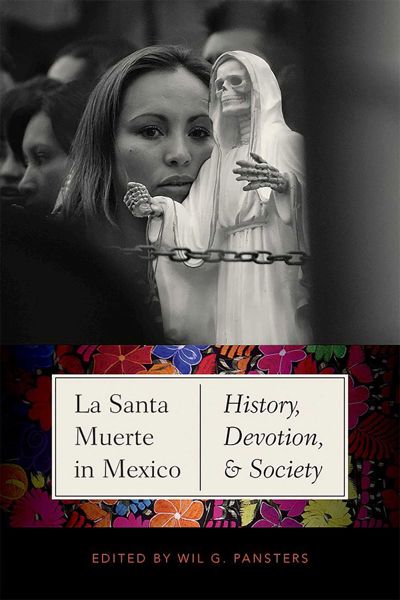
For over a decade the cult of La Santa Muerte has grown rapidly in Mexico and the United States. Thousands of people—ranging from drug runners and mothers to cabdrivers, soldiers, police, and prison inmates—invoke the protection of La Santa Muerte. Devotees seek her protection through practicing popular vows, attending public rosaries and masses at street altars, and constructing and maintaining home altars.
This book examines La Santa Muerte’s role in people’s daily lives and explores how popular religious practices of worship and devotion developed around a figure often associated with illicit activities. She represents life with the possibility of respite but without ultimate redemption, and she speaks to the complexities of lives lived at the fringes of violence, insecurity, impunity, and economic hardship. The essays collected here move beyond the visually arresting sight of La Santa Muerte as a tattoo or figurine, suggesting that she represents a major movement in Mexico.
Reviews
Firsthand accounts . . . make this volume revelatory, surprising, and hopeful. Folklorists, anthropologists, historians, and religious-studies scholars will find material of great interest in this work: historical and iconographic analyses, an overview of social practices and networks, and ethnographic depictions of performative engagement.--Kirstin Erickson, Journal of Folklore Research
Firsthand accounts . . . make this volume revelatory, surprising, and hopeful. Folklorists, anthropologists, historians, and religious-studies scholars will find material of great interest in this work: historical and iconographic analyses, an overview of social practices and networks, and ethnographic depictions of performative engagement.--Kirstin Erickson, Journal of Folklore Research