Description

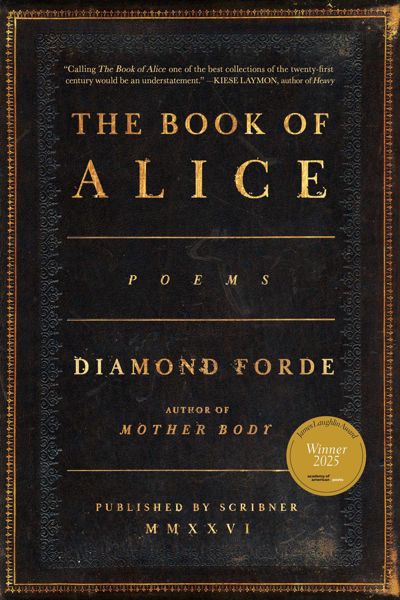
WINNER OF THE 2025 JAMES LAUGHLIN AWARD FROM THE ACADEMY OF AMERICAN POETS

A stunning new collection exploring lineage and the legacy of survival as seen through the life of the poet’s grandmother Alice—a Black woman born in the Jim Crow South—using the King James Bible as a narrative framework.

“Alice / a god-song, swings still in the high / branch of our throats. I miss her, wonder / what she plants in heaven’s mulch.”

When her grandmother died, poet Diamond Forde inherited a well-worn family Bible to remember her by. In The Book of Alice, she retells the story of her grandmother’s life through the framework of the only poetry Alice knew: the King James Bible. A Black woman born in the Jim Crow South, Alice joined the tide of the Great Migration when she made her exodus to New York City. She married, divorced, and raised eight children, all while struggling to define herself in an America that looks frighteningly like our own. Using found forms like recipes, a family tree, and a US Census Report alongside imagined psalms and scriptures, Diamond draws bold parallels between biblical narratives and the lived experiences of those often relegated to the margins of history. The result is both a heartfelt elegy and a new sacred text.

About the author(s)

Diamond Forde’s debut collection, Mother Body, was chosen by Patricia Smith as the winner of the 2019 Saturnalia Poetry Prize. She has been the recipient of the Pink Poetry Prize, the Furious Flower Poetry Prize, and CLA’s Margaret Walker Memorial Prize, and other honors. She is a Callaloo, Tin House, and Ruth Lilly and Dorothy Sargent Rosenberg fellow whose work has appeared in Boston ReviewMassachusetts ReviewNinth Letter, and elsewhere, and she serves as the interviews editor for Honey Literary. Diamond holds an MFA from The University of Alabama and a PhD in creative writing with concentrations in African American poetics and fat studies from Florida State University. She is an assistant professor at North Carolina State University.

Reviews

"Calling The Book of Alice one of the best collections of the twenty-first century would be an understatement. I do not know that I have ever read a better book about grandmothers in my readerly life. Diamond Forde handles frequencies, pauses, and traditions like a conjurer of the highest rank. I'm most taken by the sound of the book. This is as ecstatic as literature gets." —Kiese Laymon, author of Heavy

“Diamond Forde’s newest poetry collection is as much a restoration as it is a reimagining, a return of Black women to our rightful place as the center of the world and of the Word. These brilliant, breathtaking poems, brimming with intimacies and interrogations, are at once familial and universal. The Book of Alice’s cup runneth over with quiet devastations and resistances, across generations and time. This is a book I’ll keep close to my heart." —Deesha Philyaw, author of The Secret Lives of Church Ladies

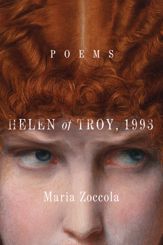
"Diamond Forde’s The Book of Alice climbs back through the branches of the family tree, calling down ancestral voices to sing inside poems inspired by Biblical tradition, recipes, a census report, and other formal containers. Forde unfurls family secrets and truths across her pages, dancing past the barriers of bloodline-memory to discover what sweetness or sharpness lives on the other side. Most delightfully, Forde’s dynamic language gallops through this book, irresistible to read out loud: 'batter / buttered, harpooned with jam….& I crop top, too. Coquette / my blubber, my bust.' The Book of Alice invites the reader into a kind of wonderful veneration—of the body, of the family, and of the holy self." —Maria Zoccola, author of Helen of Troy, 1993

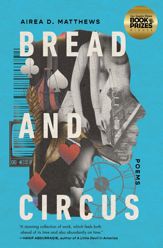
"Diamond Forde’s The Book of Alice is a gospel of inheritance in which reckoning, grief, labor, and love converge in a finely-wrought hymn. These poems thrum with vernacular holiness and unflinching music under Forde's pen, transforming domestic ritual into divine speech. The Book of Alice is both sacred text and living archive, a testament to the mothers who endured and the daughters who refuse to let their rich legacy dim." —Airea D. Matthews, author of Bread and Circus

More African American & Black